
Why Is My Mom Confused at Night?


Medically reviewed by Dr. Shifin Shad PN, MBBS, BCCPM · Reviewed 22 July 2026
Educational guidance, not medical advice. A sudden onset of confusion is a medical emergency — see below and seek urgent care.
Night-time confusion in an older parent is frightening to witness. It has several possible causes — some manageable, one urgent — and telling them apart is the key to responding well.
Key takeaways
- Night-time confusion has several causes: sundowning (with dementia), delirium (a sudden medical emergency), infection, medications, and poor sleep or disorientation in the dark.
- The crucial distinction is onset: gradual evening confusion in someone with dementia (sundowning) differs from sudden, new confusion (delirium), which is urgent.
- A urinary tract infection can cause sudden confusion, but usually alongside urinary symptoms — confusion on its own should not be assumed to be a UTI.
- Sudden new confusion should be treated as a medical emergency until a treatable cause is found or ruled out.
- For recurring evening confusion in dementia, light, routine, and calm help — see sundowning.
Quick answer
Why does my elderly mom get confused at night?
The main causes are sundowning (late-day confusion and agitation in dementia), delirium (a sudden, fluctuating confusion that is a medical emergency), infection (including a UTI, usually alongside urinary symptoms), medication effects, electrolyte imbalance (particularly low blood sodium, which is common in older adults), and poor sleep or disorientation in the dark. The key question is onset: gradual evening confusion in someone with dementia is likely sundowning, while sudden, new confusion is delirium and needs urgent medical care. When in doubt, seek help.
The most important question: how did it start?
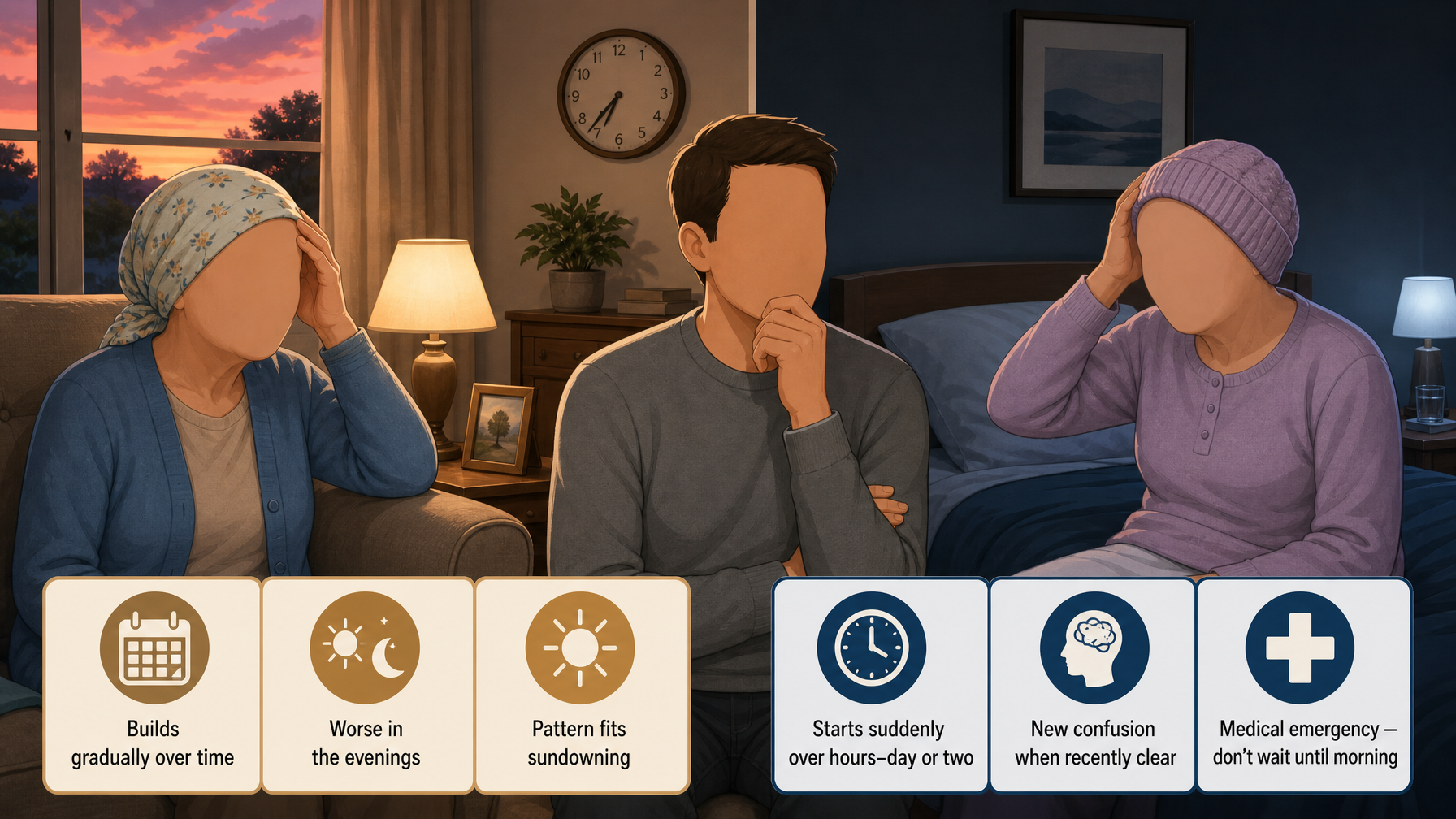
When an older parent becomes confused at night, the single most useful thing you can determine is how suddenly it came on, because that points to very different causes and urgencies.
- Gradual, recurring evening confusion in someone with known dementia, appearing as the day fades, is most likely sundowning — distressing but a manageable pattern.
- Sudden, new confusion — over hours to a day or two, in someone who was recently clear — is likely delirium, which is a medical emergency signaling an underlying problem that needs urgent treatment.
Everything else in this guide flows from that distinction. If the confusion is new and sudden, skip to the urgent section and act.
Sundowning (with dementia)
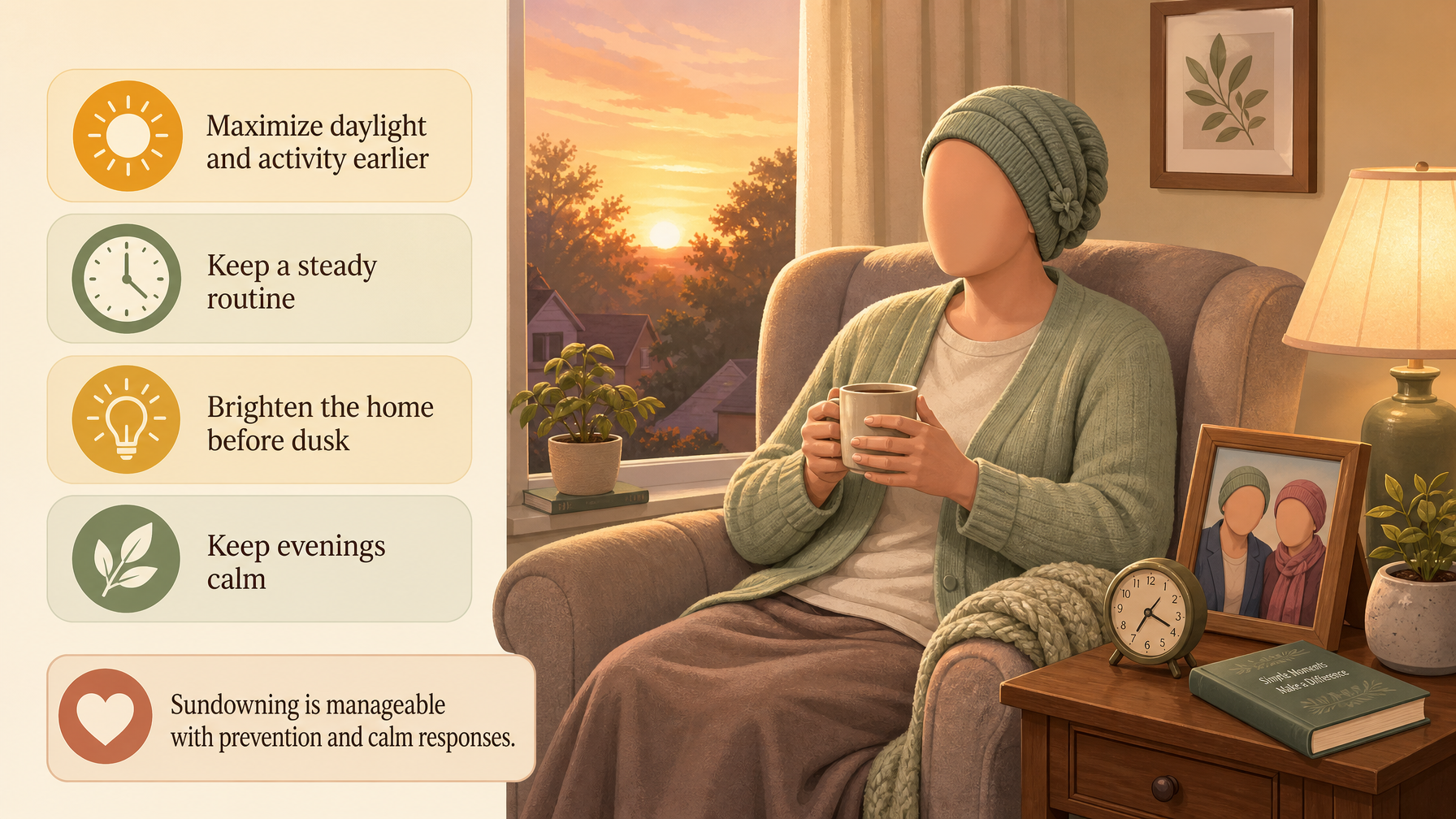
If your mom has dementia and becomes more confused, anxious, or agitated as the afternoon turns to evening — in a recurring pattern — this is likely sundowning. It is thought to result from a disrupted body clock, accumulated fatigue, fading light and shadows, and end-of-day overstimulation.
Sundowning is manageable with prevention and calm responses: maximize daylight and activity earlier in the day, keep a steady routine, brighten the home before dusk, and keep evenings calm. Our dedicated guide on dementia and sundowning covers the full strategy, and how to calm a dementia patient helps in the moment.
Delirium — a medical emergency
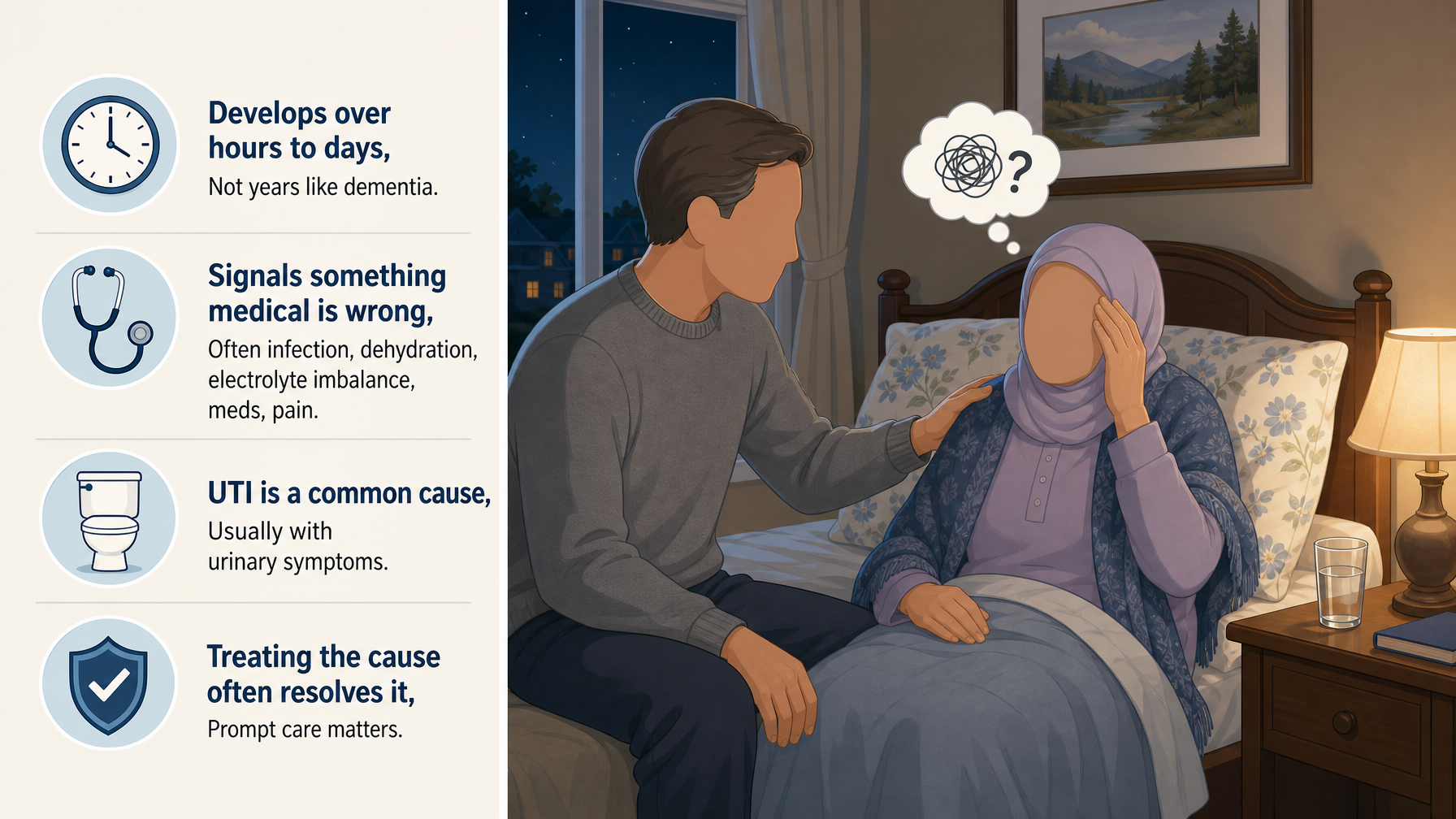
Delirium is a sudden change in mental state — new confusion, disorientation, and often fluctuating alertness that comes and goes — developing over hours to a couple of days. It is not the same as dementia (which develops slowly over years), and it is always a signal that something medical is wrong. It can occur in people with or without dementia, and at night it can be especially pronounced.
Delirium is a medical emergency because it is caused by an underlying problem that needs treatment — commonly infection, dehydration, medication effects, pain, or other acute illness. The good news is that when the cause is treated, delirium often resolves. The essential response is to seek prompt medical care to find and fix the cause.
Safety first
Sudden, new confusion (delirium) is a medical emergency. Seek urgent care to find the cause — do not assume it is "just old age" or "just the dementia," especially if it appeared over hours or days.
Infection, especially a UTI

A urinary tract infection deserves special mention because it is one of the most common infective causes of sudden confusion in older adults. A urinary tract infection can cause sudden confusion, usually alongside urinary symptoms such as burning, urgency or a change in the urine. Confusion without those symptoms should not be assumed to be a UTI — it needs proper assessment, because the cause may be something else entirely. Older adults also often have bacteria in the urine without an infection, so a positive test alone does not confirm the UTI is what is causing the confusion.
So if your mom becomes suddenly confused, infection is one of several things worth checking — it can be checked as part of a medical assessment, and when it is the cause, treating it often clears the confusion. See UTI signs in seniors for the atypical symptoms and when to seek care, and note that infection can also cause sudden incontinence and excessive sleepiness.
Other contributors
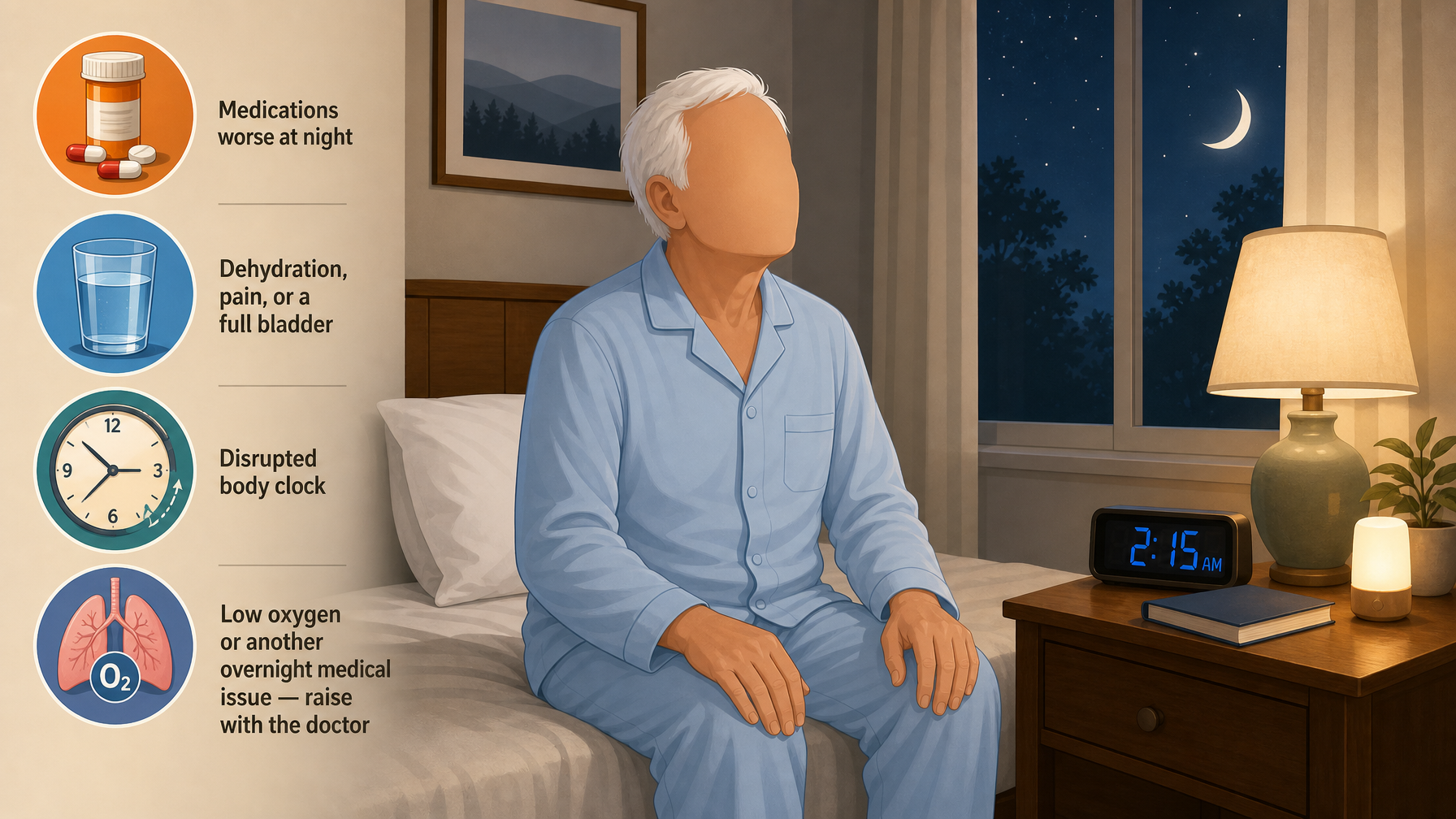
Several other factors cause or worsen night-time confusion:
- Medications — some cause confusion or drowsiness, and effects can be worse at night; ask about a medication review.
- Poor sleep and disorientation in the dark — waking in a dark, quiet room can be disorienting; a night light and a dementia clock showing it is night-time help.
- Dehydration, pain, or a full bladder disturbing sleep and clarity — see nighttime incontinence solutions.
- Disrupted body clock and dementia sleep problems, which feed night-time confusion.
- Low oxygen or other medical issues overnight, worth raising with the doctor.
What to do
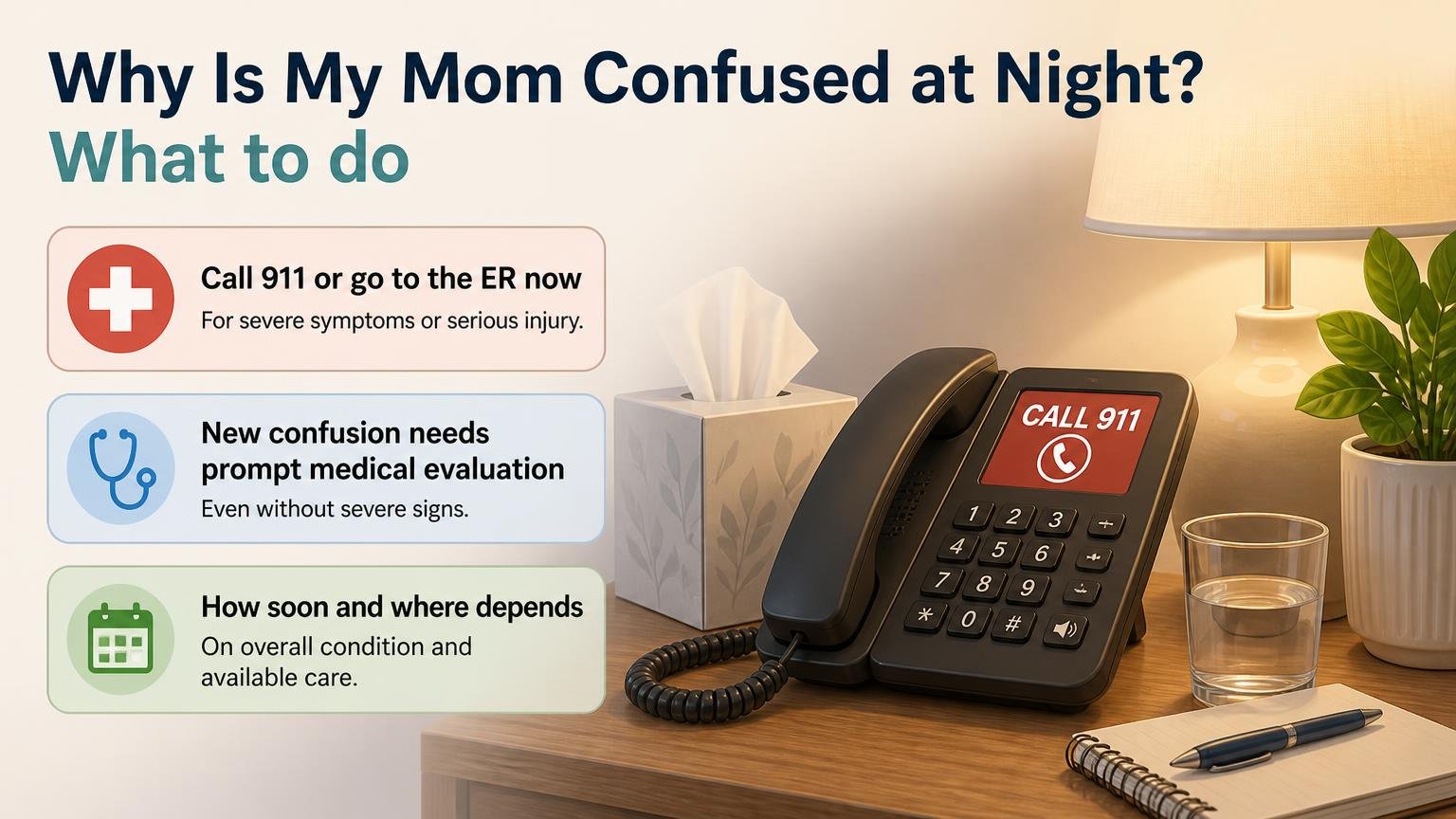
Your response depends on the onset:
- 1
If it is sudden and new — act urgently
If the confusion appeared suddenly and is accompanied by unresponsiveness, difficulty breathing, chest pain, or a serious injury, call 911 or go to the ER now. If it’s new confusion without those severe signs, it still needs prompt medical evaluation — how soon and where depends on the person’s overall condition and what care is available to you, so call their doctor or a nurse line to figure out the right next step rather than waiting to see if it passes. Note when it started and any other symptoms (fever, pain, new incontinence) to share with whoever you reach.
- 2
If it is the recurring evening pattern of sundowning
Use the prevention and calming strategies in dementia and sundowning — daylight, routine, brightening the home before dusk, calm evenings.
- 3
Mention it to the doctor either way
Even if it looks like routine sundowning, mention any sudden change to the doctor — infection, dehydration, and medication effects are all worth ruling out, and a simple check can catch something treatable early.
- 4
Improve the night environment
Night lights, a clear safe path, reduced noise, and reassurance reduce disorientation and keep the person safe if they get up — see safe bedroom setup and nighttime falls.
- 5
Ensure night safety
Confusion at night raises the risk of falls and wandering — consider door alarms or monitoring.
Frequently asked questions
Why does my elderly mom get confused at night?
The main causes are sundowning (recurring late-day confusion in dementia), delirium (sudden new confusion that is a medical emergency), infection such as a UTI (usually alongside urinary symptoms), electrolyte imbalance such as low blood sodium, medication effects, and poor sleep or disorientation in the dark. The key is how suddenly it started — sudden new confusion needs urgent care.
What is the difference between sundowning and delirium?
Sundowning is a recurring pattern of increased confusion and agitation in the late day and evening in people with dementia, and is manageable. Delirium is a sudden change in mental state — new, often fluctuating confusion developing over hours to days — that signals an underlying medical problem and is an emergency. Onset is the key difference: gradual and recurring versus sudden and new.
Can a UTI cause confusion at night in the elderly?
Yes, and it is one of the most common infective causes. A urinary tract infection can cause sudden confusion, usually alongside urinary symptoms such as burning, urgency or a change in the urine. Confusion without those symptoms should not be assumed to be a UTI — it needs proper assessment, because the cause may be something else entirely. Older adults also often have bacteria in the urine without an infection, so a positive test alone does not confirm the UTI is what is causing the confusion. A urine test and assessment are the way to settle it, so any sudden change in an older adult is worth a prompt medical review.
Is sudden confusion in an elderly person an emergency?
Yes. Sudden, new confusion (delirium) developing over hours to a couple of days is a medical emergency, because it signals an underlying problem — often infection, dehydration, medication, or pain — that needs treatment. Seek urgent care rather than assuming it is aging or dementia progression; treating the cause often resolves it.
How can I reduce my mom’s confusion at night?
First rule out and treat medical causes, especially infection. For the recurring evening confusion of sundowning, maximize daylight and activity earlier in the day, keep a steady routine, brighten the home before dusk, and keep evenings calm. Use night lights and a clear, safe path, reduce noise, and reassure gently. Ensure night safety against falls and wandering.
Should I be worried if my parent with dementia is confused at night?
Recurring evening confusion in dementia (sundowning) is common and manageable, but do not assume every change is "just the dementia." A sudden increase in confusion, or new confusion, can signal a treatable problem like infection and should be checked promptly. Distinguishing the gradual pattern from a sudden change is what tells you when to seek urgent care.
Sources
- MedlinePlus (U.S. National Library of Medicine). Delirium
- National Institute on Aging (NIH). The Dilemma of Delirium in Older Patients
- Clinical Infectious Diseases (Norman, 2000). Fever in the Elderly
- CDC. About Sepsis
