
Dementia and Sleep Problems: Causes and Solutions

Educational guidance based on dementia-care principles; not medical advice. Sleep medications carry real risks in dementia and should only be considered with a doctor.
Sleep problems are one of the most exhausting parts of dementia care — for the person and for you. They have understandable causes, and a set of practical, mostly drug-free strategies genuinely help.
Key takeaways
- Dementia damages the brain’s body clock, causing night waking, day-night reversal, and restlessness — it is part of the disease, not defiance.
- The first-line help is daylight and activity by day + a calm, consistent bedtime routine — this can help reset sleep rhythms.
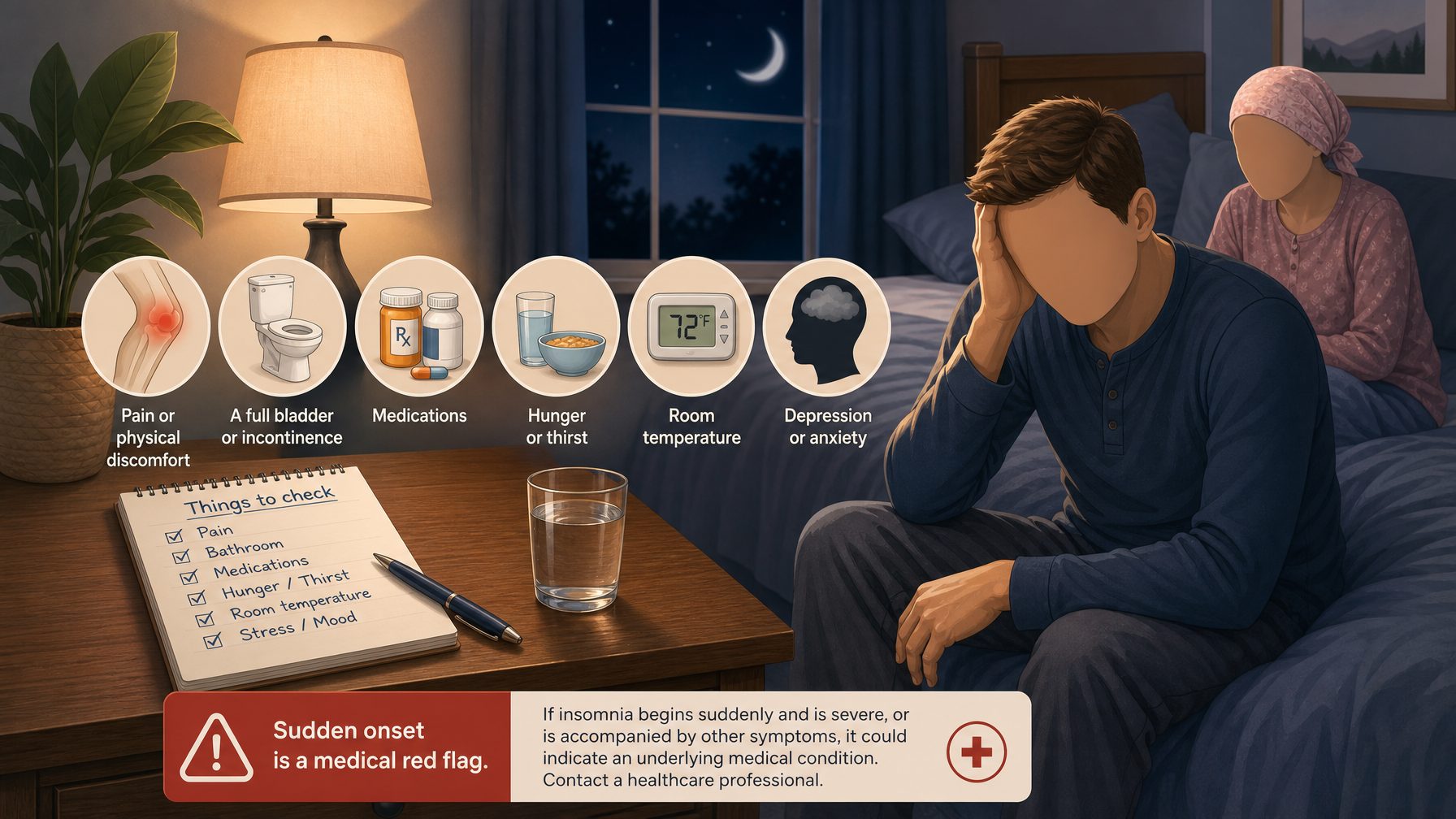
- Hunt for hidden causes: pain, a full bladder or incontinence, medications, sundowning, or an uncomfortable environment.
- Make the bedroom and night safe, since a person who wakes confused may wander — see dementia wandering.
- Sleep medications carry serious risks in dementia (falls, more confusion) — try behavioral strategies first and only use drugs with a doctor.
Quick answer
How can I help a person with dementia sleep better?
Prioritize the body clock: plenty of daylight and gentle activity during the day, limited and early naps, and a calm, consistent bedtime routine in a comfortable, dark, quiet bedroom. Rule out and treat hidden causes — pain, a full bladder, medications, hunger, or sundowning. Make the night safe in case they wake and wander. Avoid caffeine and big evening meals, and treat sleep medication as a last resort to discuss with a doctor, given its risks.
Why dementia disrupts sleep
Sleep problems are extremely common in dementia, and understanding why helps you respond with patience rather than frustration. The core reason is that the diseases behind dementia damage the parts of the brain that regulate the sleep-wake cycle — the internal body clock. The signals that normally keep us asleep at night and awake by day become unreliable.
The results are familiar to many caregivers: waking repeatedly through the night, getting up and being active at 3 a.m., confusing night and day (day-night reversal), difficulty falling asleep, and restlessness. On top of the brain changes, factors like reduced daytime activity, less light exposure, sundowning, discomfort, and medications all pile on. None of this is the person being difficult — it is the illness.

An ElderlyDaily original
Want the whole thing in one place?
Dementia Caregiver Command Center
- Daily care and medication logs in one place
- Behaviour-pattern tracking, to spot what makes a day harder
- Safety pages and caregiver handoff sheets for family and respite helpers
One-off purchase. Instant download.
Fillable PDF · US Letter + A4

Sponsored Pick
American Lifetime Day Clock
Seniors who need a clear, large-print day-and-date clock they can read across a room
Check PriceFix the day to fix the night
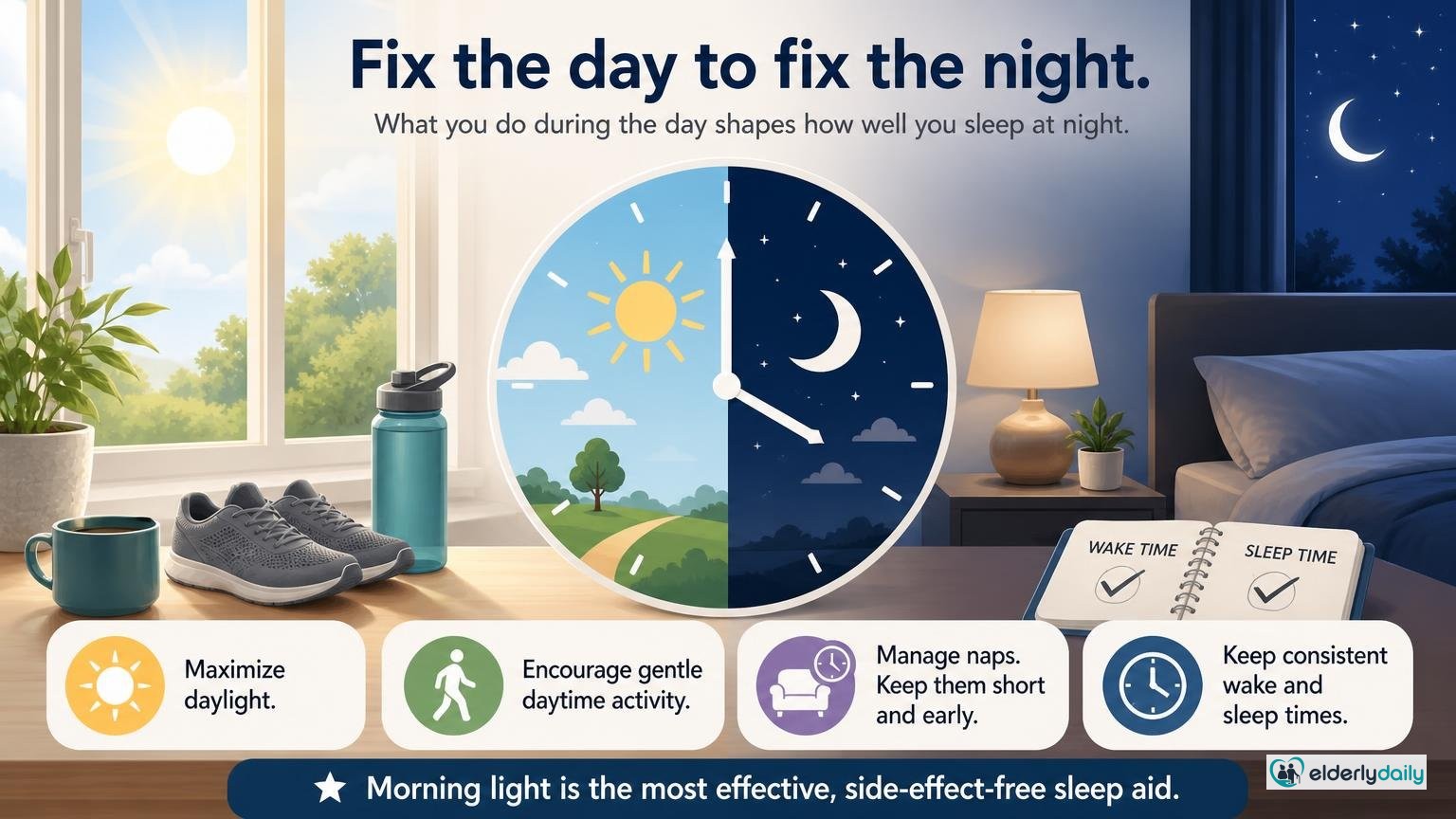
It is counterintuitive, but the most powerful lever for night sleep is what happens during the day. Strengthening the body’s day-night contrast helps reset the clock:
- Maximize daylight, especially in the morning — time by a bright window or outdoors. Light is the strongest cue for the body clock.
- Encourage regular, gentle daytime activity, which builds healthy tiredness by night — even short walks or simple activities help.
- Manage naps — keep them short and early; long or late-afternoon naps steal night sleep. It is a balance, since overtiredness worsens sundowning.
- Keep consistent wake and sleep times to anchor the rhythm — see dementia daily routine.
Good to know
Morning light is a simple, drug-free step that may help sleep in dementia. Aim for a good dose of bright light early in the day, every day.
A calming bedtime routine and bedroom
A predictable, soothing wind-down signals the brain that sleep is coming, and a comfortable bedroom supports it:
- Keep a consistent, calming pre-bed routine — the same gentle sequence each night (a warm drink, quiet music, dim lights) becomes a cue for sleep.
- Wind down early — reduce noise, bright screens, and stimulating activity in the evening.
- Make the bedroom sleep-friendly — comfortable temperature, dark, and quiet, with supportive pillows and bedding.
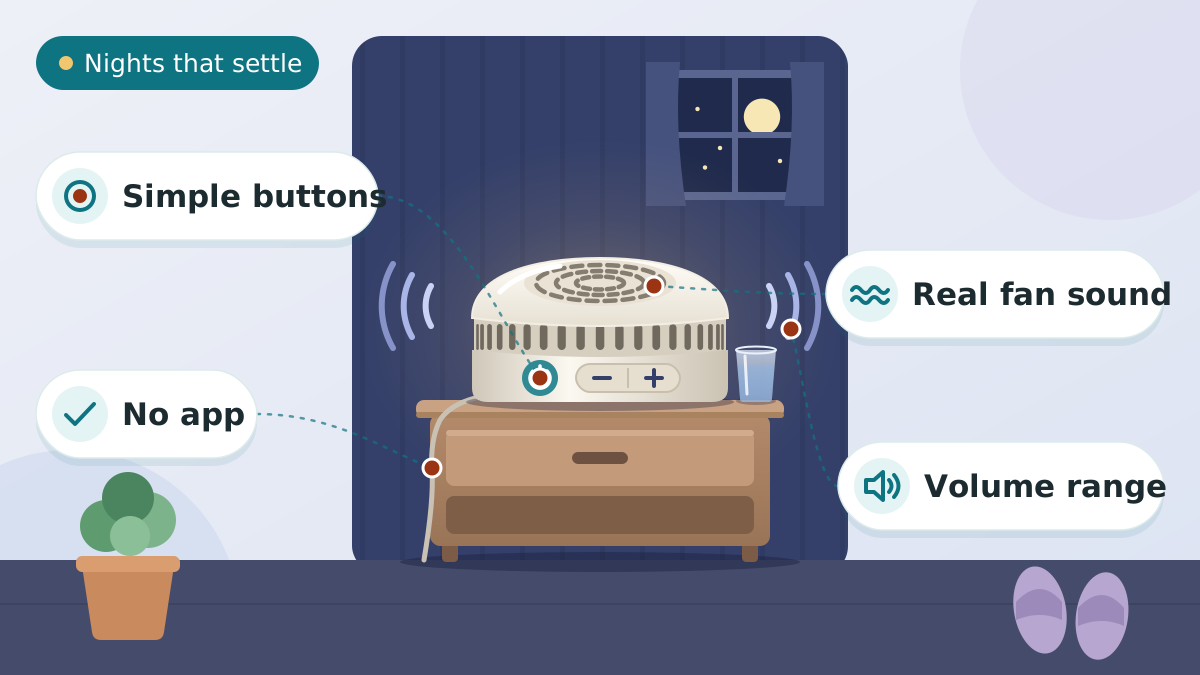
- Use a low night light so if the person wakes, they are not frightened by darkness and can orient — see night lights. A dementia clock showing "night" can reduce the urge to get up.
- Manage evening fluids and the toilet — offer the bathroom before bed, and see nighttime incontinence solutions if that is a factor.
Keeping the night safe
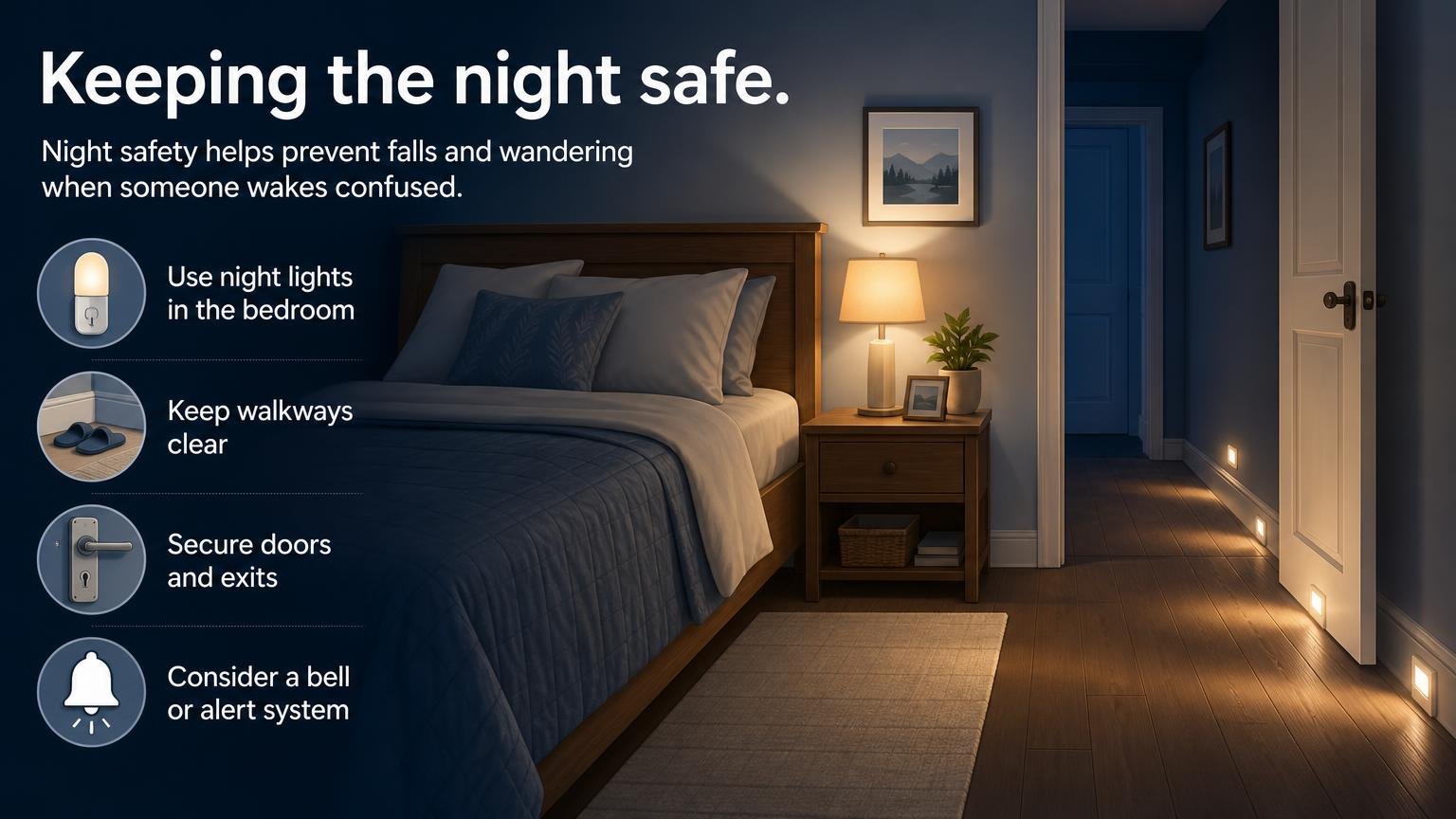
A person who wakes confused and gets up is at risk of falls and wandering, so night safety is part of managing sleep problems:
- Light the path with night lights and keep it clear of hazards — see nighttime falls in seniors.
- Address wandering risk with door alarms or monitoring systems so you know if they get up or head for an exit.
- Consider a bed alarm that alerts you when the person gets out of bed, if night wandering is a concern.
- Set up the bedroom for safe movement at night.
A careful word on sleep medication
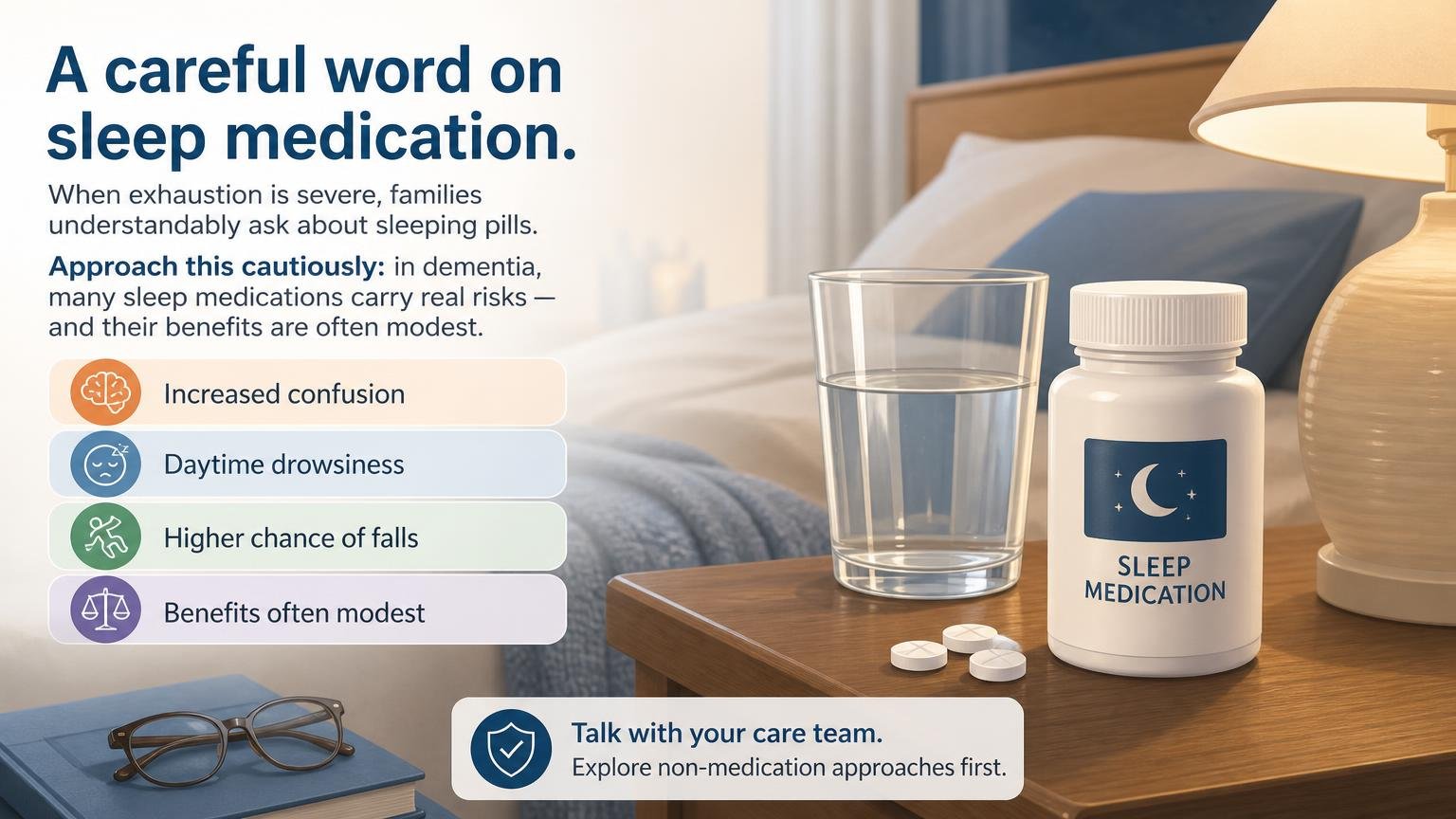
When exhaustion is severe, families understandably ask about sleeping pills. Approach this cautiously: in dementia, many sleep medications carry real risks — increased confusion, daytime drowsiness, and a higher chance of falls — and their benefits are often modest.
For these reasons, behavioral and environmental strategies are the first-line approach and are frequently effective. If sleep problems remain severe despite them, discuss it with the doctor, who can look for treatable causes, review current medications (some may be worsening sleep), and weigh any medication’s benefits against its risks for that individual. Never use over-the-counter sleep aids in a person with dementia without medical advice, as some can worsen confusion.
Safety first
Do not give over-the-counter sleep aids (including many "PM" products and some antihistamines) to a person with dementia without a doctor’s guidance — several can increase confusion and fall risk.
Frequently asked questions
Why do dementia patients have trouble sleeping?
Dementia damages the brain’s regulation of the sleep-wake cycle (the body clock), so the signals that keep us asleep at night and awake by day become unreliable — causing night waking, day-night reversal, and restlessness. Reduced daytime activity and light, sundowning, discomfort, a full bladder, and medications add to it. It is part of the illness, not deliberate behavior.
How can I get a dementia patient to sleep at night?
Strengthen the body clock: plenty of daylight and gentle activity during the day, short and early naps only, and a calm, consistent bedtime routine in a comfortable, dark, quiet bedroom. Rule out hidden causes like pain, a full bladder, or medications. Avoid caffeine and heavy evening meals, and keep the night safe in case they wake.
Why is my parent with dementia awake all night?
Day-night reversal is common in dementia — the damaged body clock can flip, so the person is awake and active at night and sleepy by day. Boosting daytime light and activity, limiting daytime naps, and keeping consistent wake and sleep times help reset the rhythm. A sudden change, though, can signal a treatable problem and should be checked.
Are sleeping pills safe for dementia patients?
Often not without caution. Many sleep medications increase confusion, daytime drowsiness, and fall risk in dementia, with only modest benefit, and some over-the-counter sleep aids can worsen confusion. Behavioral and environmental strategies are first-line. If problems persist, a doctor can look for causes and weigh any medication’s risks and benefits for that person.
How do daytime naps affect dementia sleep?
Long or late-afternoon naps can steal night-time sleep and worsen day-night reversal, while being overtired can worsen sundowning — so it is a balance. Keep naps short and early in the day, and prioritize daytime light and activity to build healthy night-time tiredness.
Could a sudden change in my parent’s sleep mean something is wrong?
Yes. A sudden onset of severe night restlessness, insomnia, or confusion is a red flag that can indicate an infection (such as a UTI), pain, dehydration, or a medication effect rather than disease progression. It warrants a prompt medical check rather than being assumed to be "just the dementia."
Sources
- Alzheimer's Association. Treatments for Sleep Changes
- National Institute on Aging (NIH). Managing Sleep Problems in Alzheimer's Disease
- MedlinePlus (U.S. National Library of Medicine). Delirium
- Clinical Infectious Diseases (Norman, 2000). Fever in the Elderly
