
Why Is My Elderly Parent Sleeping All Day?

Educational guidance, not medical advice. A new or marked increase in sleepiness should be discussed with a doctor — it often has a treatable cause.
A parent who has started sleeping most of the day is telling you something. Some causes are ordinary, some are treatable, and a few are urgent — this guide helps you tell which, and what to do.
Key takeaways
- Sleeping much more than usual is a symptom, not just aging — a noticeable change deserves a look at why.
- Common causes include depression, medication side effects, poor night-time sleep, infection, and dementia progression — several are treatable.
- A sudden increase in sleepiness, or difficulty rousing them, can be urgent — signaling infection, a medication problem, or something more serious.
- If they are hard to wake, confused, or unresponsive, treat it as an emergency.
- The action for a non-urgent change is a medical review to find and treat the cause.
Quick answer
Why is my elderly parent sleeping all day?
Excessive daytime sleep in a senior is a symptom worth investigating. Common, often treatable causes include depression, medication side effects, poor or disrupted night-time sleep, infection (which in seniors can cause drowsiness and confusion), dehydration, thyroid or other medical conditions, and dementia progression. A sudden increase, or difficulty waking them, is more urgent — and being hard to rouse, very confused, or unresponsive is an emergency. For a non-urgent change, arrange a medical review to find the cause.
Is sleeping more just part of aging?
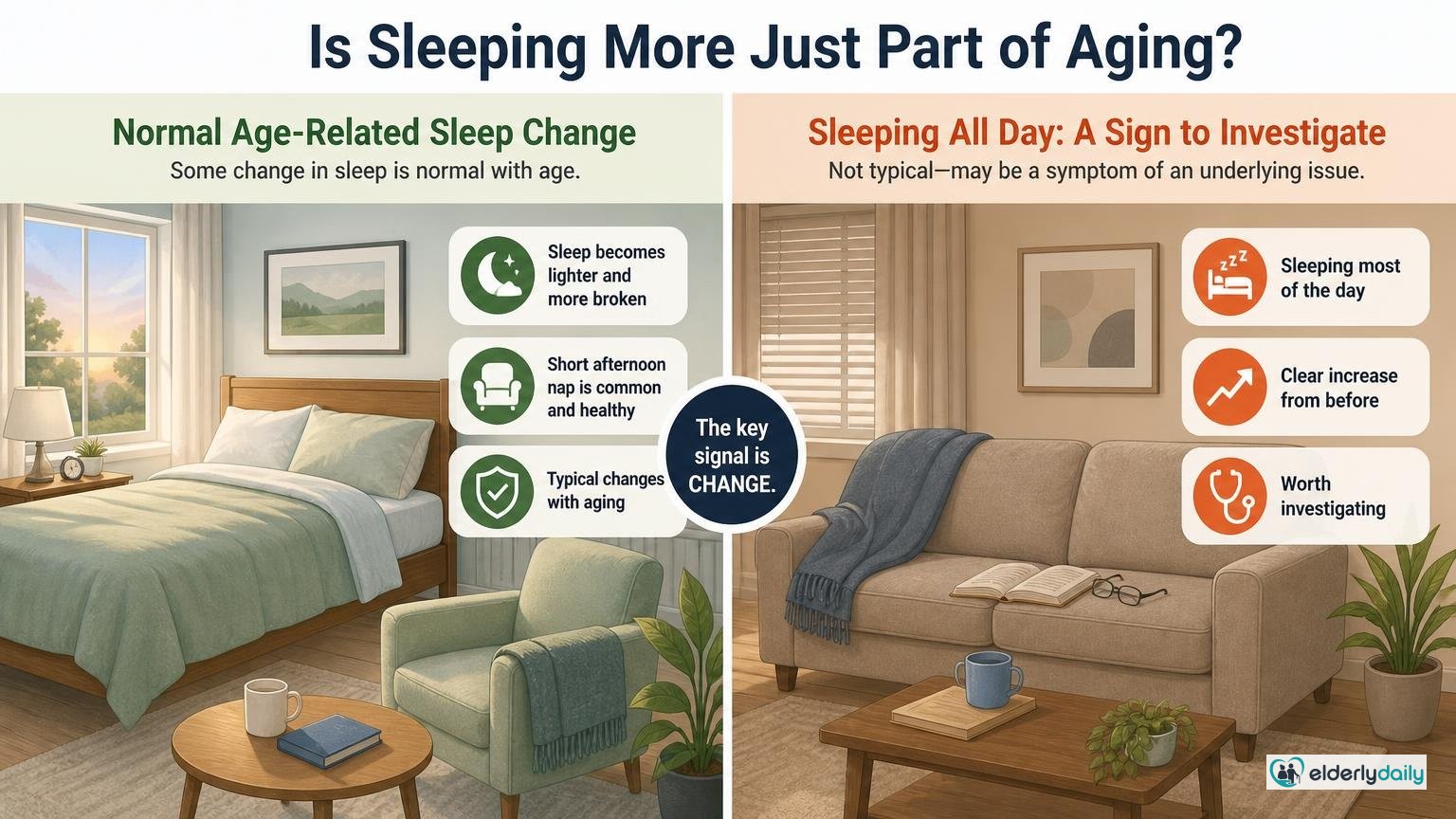
Some change in sleep is normal with age — sleep becomes lighter and more broken, and a short afternoon nap is common and healthy. But sleeping *most* of the day, or a clear increase from how your parent used to be, is different: that is a symptom worth understanding rather than dismissing as "just getting older."
The reassuring news is that many causes are treatable, so investigating is worthwhile. The important news is that a few causes are urgent. This guide walks through the range, from ordinary to emergency, so you know how to respond. Throughout, the key signal is change — a new or marked increase in sleepiness is what warrants attention.

Sponsored Pick
American Lifetime Day Clock
Seniors who need a clear, large-print day-and-date clock they can read across a room
Check PriceCommon (often treatable) causes
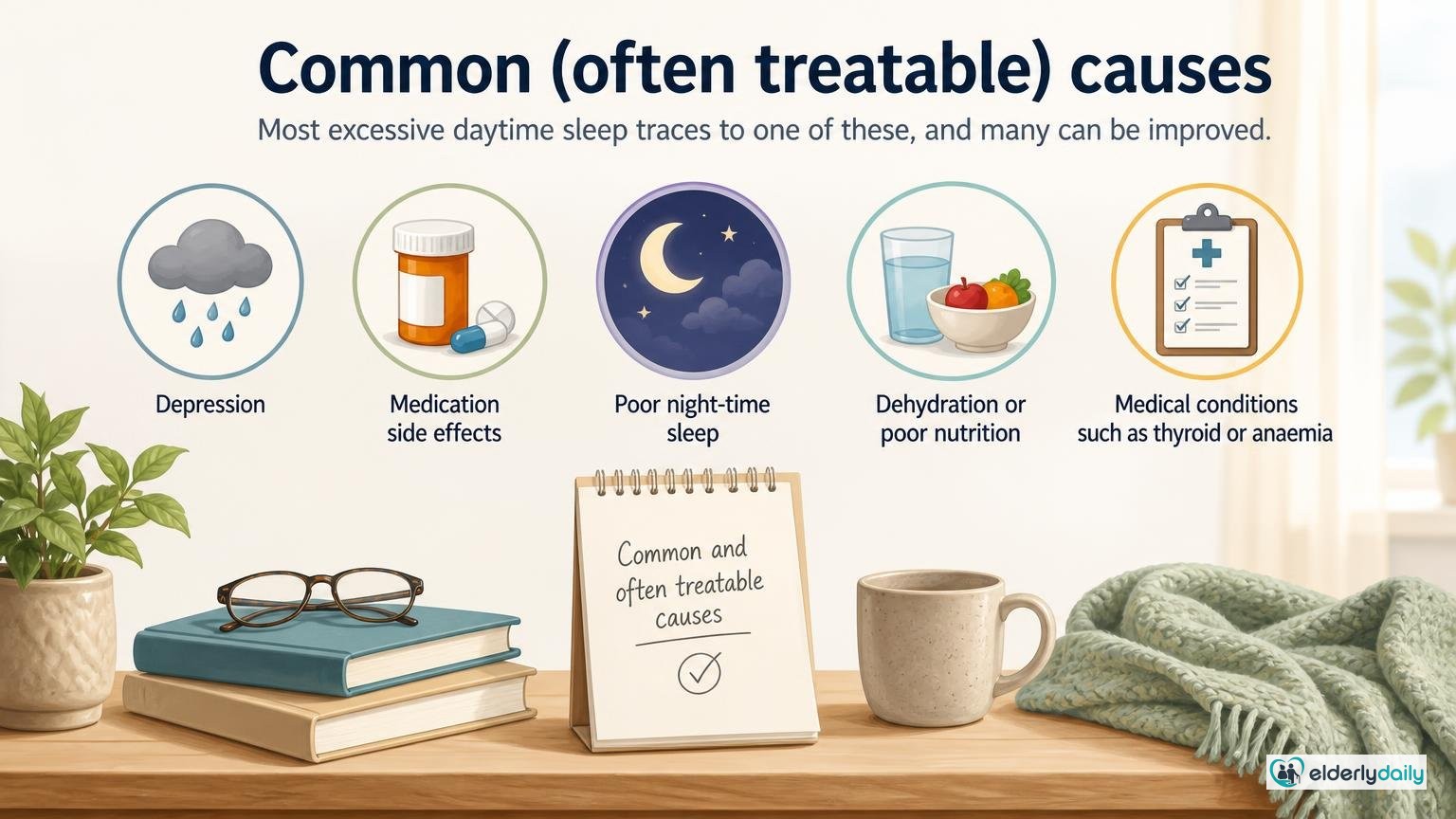
Most excessive daytime sleep traces to one of these, and many can be improved:
- Depression — very common and under-recognized in older adults, and a frequent cause of sleeping a lot, withdrawal, and low energy. It is treatable, so it is important to consider.
- Medication side effects — sedatives, some painkillers, and many other drugs cause drowsiness, and the effect grows with the number taken. Ask about a medication review.
- Poor night-time sleep — if nights are broken (pain, needing the toilet, nighttime incontinence, sleep apnea, or dementia sleep problems), the person catches up by day.
- Infection — in seniors, an infection like a UTI or a chest infection often shows as drowsiness and confusion rather than classic symptoms.
- Dehydration or poor nutrition, which sap energy.
- Medical conditions — an underactive thyroid, anemia, heart or lung problems, and others cause fatigue and can be diagnosed with simple tests.
- Boredom or under-stimulation — with little to do or engage with, sleeping fills the day.
Sleeping more with dementia
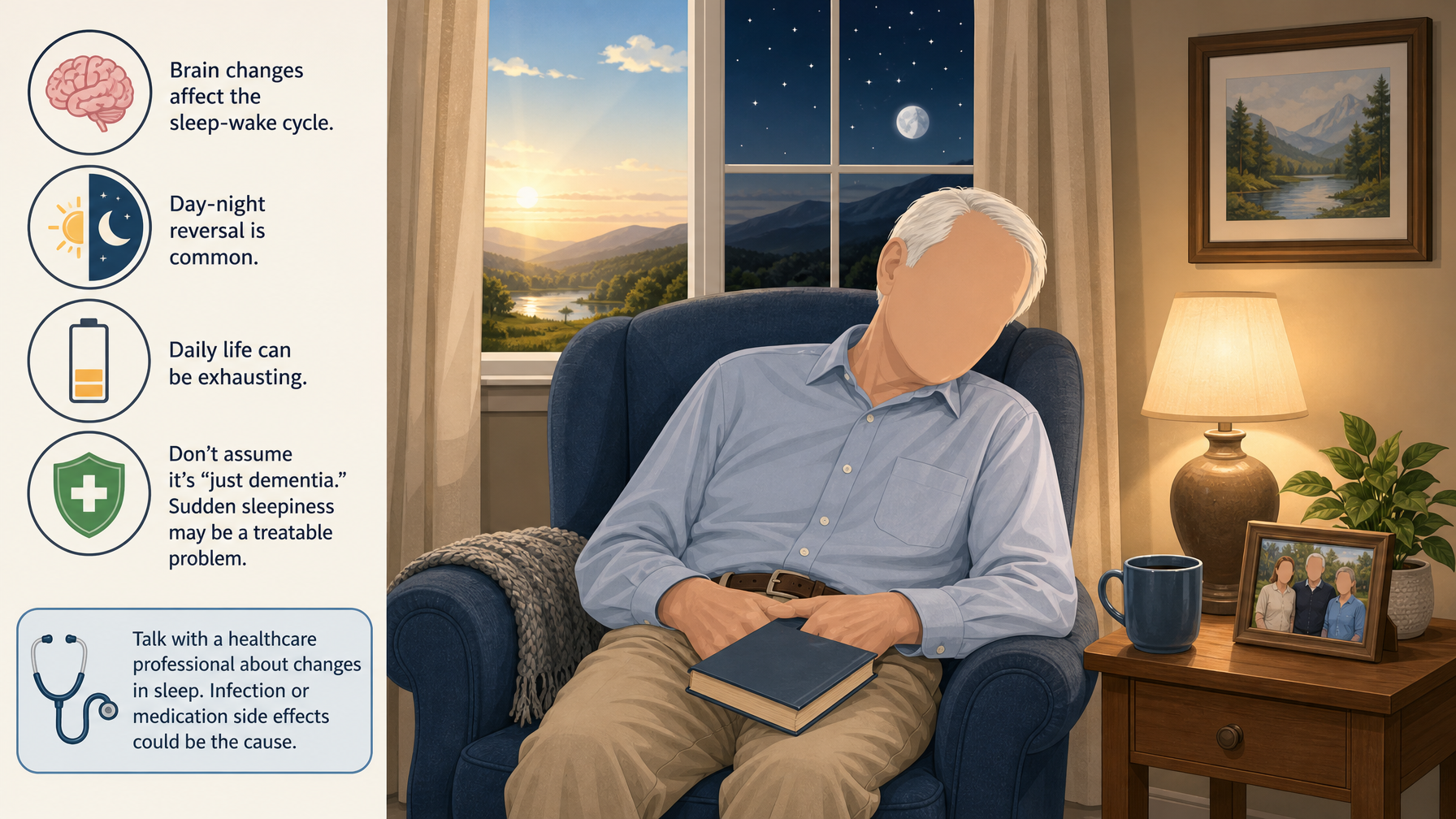
If your parent has dementia, sleeping more is common and tends to increase as the condition advances — the brain changes affect the sleep-wake cycle, and the effort of daily life is exhausting. Day-night reversal (up at night, asleep by day) is also common; see dementia sleep problems and why mom is confused at night.
Even so, do not assume a change is "just the dementia." A sudden increase in sleepiness in someone with dementia is a classic sign of a treatable problem like infection or a medication effect, and deserves the same medical check — see signs dementia is getting worse to distinguish gradual progression from an acute change.
Watch out
In a person with dementia, a sudden jump in sleepiness or drowsiness is often infection (like a UTI) or a medication issue — not simple progression. Have it checked promptly rather than assuming it is the disease.
When it is urgent or an emergency
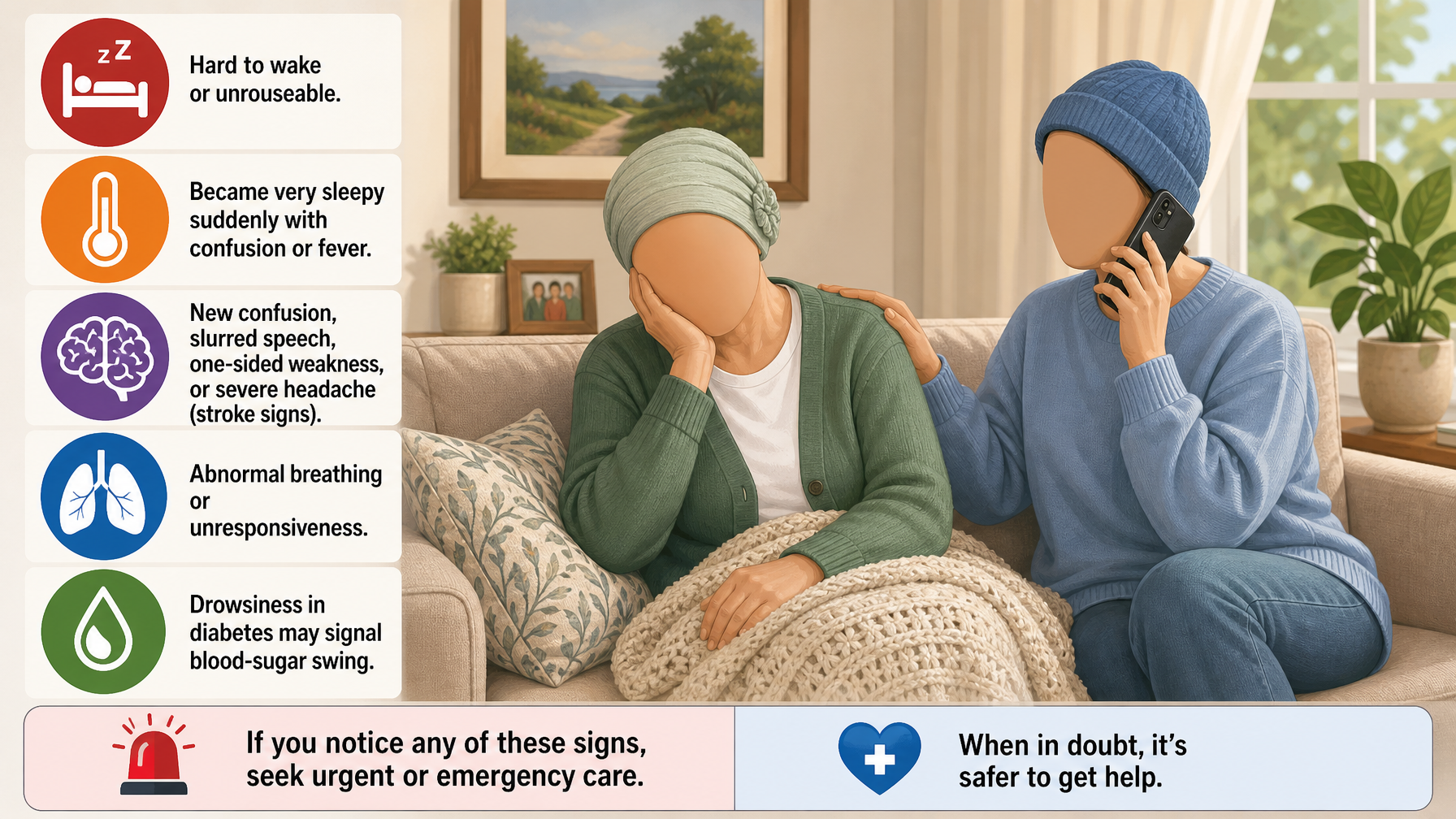
Certain features turn excessive sleep from "book a review" into "act now." Seek urgent or emergency care if the person:
- Is hard to wake, unusually drowsy, or cannot be roused normally — this can signal a serious medical problem and needs emergency assessment.
- Became very sleepy suddenly, especially with confusion, fever, or feeling unwell.
- Has new confusion, slurred speech, weakness or numbness (especially one-sided), or a severe headache — possible stroke; call emergency services.
- Is breathing abnormally, or is unresponsive — an emergency.
- Has a known condition (like diabetes) where drowsiness can signal a dangerous swing in blood sugar.
Safety first
Being difficult to wake or unrousable is a medical emergency — do not wait to "let them sleep it off." Call emergency services, especially if there is confusion, one-sided weakness, slurred speech, or abnormal breathing.
What to do
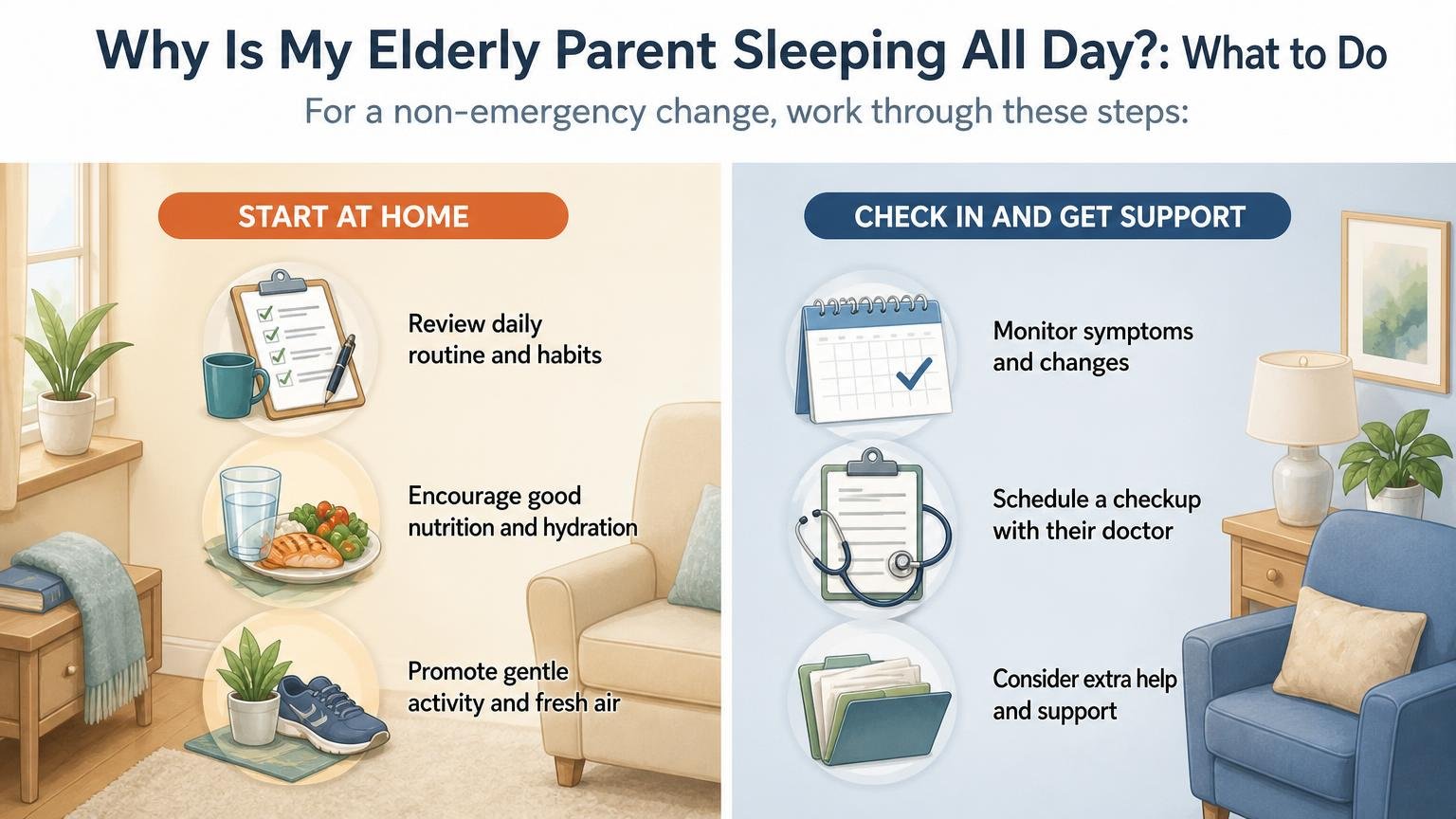
For a non-emergency change, work through these steps:
- 1
Note the pattern
Record when the change started, how much they are sleeping, and any other new symptoms (mood, appetite, confusion, pain, fever). This guides the doctor.
- 2
Check the obvious
Consider recent medication changes, how they are sleeping at night, mood and appetite, and fluid intake — each is a common, addressable cause.
- 3
Arrange a medical review
A doctor can check for infection, depression, thyroid and blood problems (anemia), medication effects, and other causes with simple tests. Mention the change clearly.
- 4
Support good day-night rhythm
Daylight, gentle activity, and engagement by day, and good sleep habits at night, help if poor night sleep or under-stimulation is part of it.
- 5
Escalate if it worsens
If they become hard to rouse, newly confused, or unwell, switch to urgent care.
Frequently asked questions
Why is my elderly parent suddenly sleeping all day?
A sudden increase in daytime sleep is a symptom to investigate. Common causes include depression, medication side effects, poor night-time sleep, infection (which in seniors often causes drowsiness and confusion), dehydration, thyroid or blood problems, and dementia progression. Because a sudden change can signal a treatable — or occasionally serious — problem, it warrants a prompt medical review, and emergency care if the person is hard to wake.
Is it normal for elderly people to sleep a lot?
Some change is normal — sleep becomes lighter and a short nap is healthy. But sleeping most of the day, or a clear increase from before, is a symptom rather than simply aging. It is worth investigating because many causes, such as depression, medication effects, and infection, are treatable.
Can a UTI make an elderly person sleep all day?
Yes. In older adults, infections like a urinary tract infection often present as drowsiness, new confusion, or a general decline rather than classic symptoms. A sudden increase in sleepiness, especially with confusion, is a reason to check for infection promptly. See our UTI signs in seniors guide.
When is excessive sleeping an emergency?
Treat it as an emergency if the person is hard to wake or cannot be roused normally, became very sleepy suddenly with confusion or fever, has stroke signs (one-sided weakness, slurred speech, severe headache), is breathing abnormally, or is unresponsive. Also urgent for someone with diabetes, where drowsiness can signal a dangerous blood-sugar swing.
Could depression cause my parent to sleep all day?
Yes — depression is common and under-recognized in older adults and frequently causes excessive sleep, low energy, and withdrawal. It is very treatable, which is why it is important to consider rather than dismiss. A doctor can assess for depression alongside other causes of increased sleepiness.
What should I do if my parent is sleeping too much?
Note when the change began and any other symptoms, check for recent medication changes, poor night sleep, low mood, and dehydration, and arrange a medical review to test for infection, depression, thyroid and blood problems, and medication effects. Support a good day-night rhythm, and seek urgent care if they become hard to rouse or newly confused.
Sources
- Clinical Infectious Diseases (Norman, 2000). Fever in the Elderly
- MedlinePlus (U.S. National Library of Medicine). Delirium
- CDC. Signs and Symptoms of Stroke
