
Fun Questions to Ask Dementia Patients

Practical guidance based on person-centered dementia care; adapt to the individual and their stage, and always follow their emotional cues.
The right question can light up a person with dementia — unlocking a memory, a smile, or a story. The trick is asking in a way that invites joy, not tests the memory.
Key takeaways
- The goal is connection and joy, not correct answers — ask to spark a feeling, memory, or smile, never to test recall.
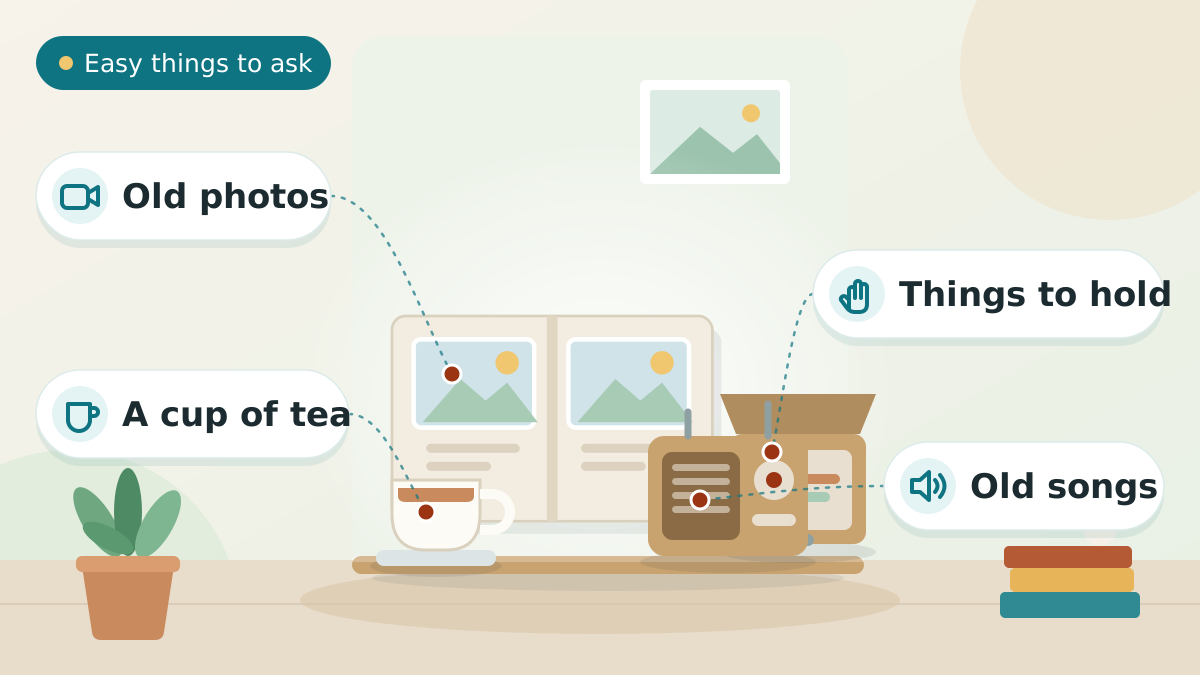
- Draw on long-term memory (childhood, youth, work, family) and the senses and feelings, which often remain accessible longer.
- Avoid recent-memory questions ("what did you have for lunch?") and "do you remember" quizzes, which cause anxiety.
- Follow the person’s emotional cues — there are no wrong answers, and comfort matters more than accuracy.
- Pair conversation with music, photos, and activities, which spark even richer connection.
Quick answer
What are good questions to ask someone with dementia?
Ask questions that spark joy, memory, and connection — not ones that test recent memory. Good topics: childhood and youth ("What games did you play as a child?"), family and life ("How did you meet your husband?"), work and skills ("What was your first job?"), and feelings and preferences ("What music do you love?"). Draw on long-term memory and the senses, avoid "do you remember" quizzes and recent-memory questions, and follow the person’s emotional cues — there are no wrong answers. Pair with music, photos, and activities.
Why gentle questions matter

Conversation is one of the simplest and most powerful ways to connect with a person who has dementia — and the right questions can unlock a memory, a story, a smile, or a moment of genuine joy, even as the disease progresses. But the *way* you ask matters enormously. A question that tests recent memory ("What did we do this morning?") causes anxiety and highlights loss; a question that invites the person into a happy memory or feeling brings comfort and connection.
The secret is to draw on what remains accessible — usually long-term memories (childhood, youth, family, work) and feelings and the senses — rather than recent events, which are hardest hit. This guide offers ideas and, just as importantly, how to ask them well. It sits alongside activities for seniors with dementia and the communication principles in how to calm a dementia patient.
A gentle reminder
These questions are for warmth and connection, not memory testing — never quiz or correct. They support quality of life but are not a treatment for dementia. For a diagnosis, or if you see a sudden change in memory or mood, speak with your loved one’s doctor.
An ElderlyDaily original
Want the whole thing in one place?
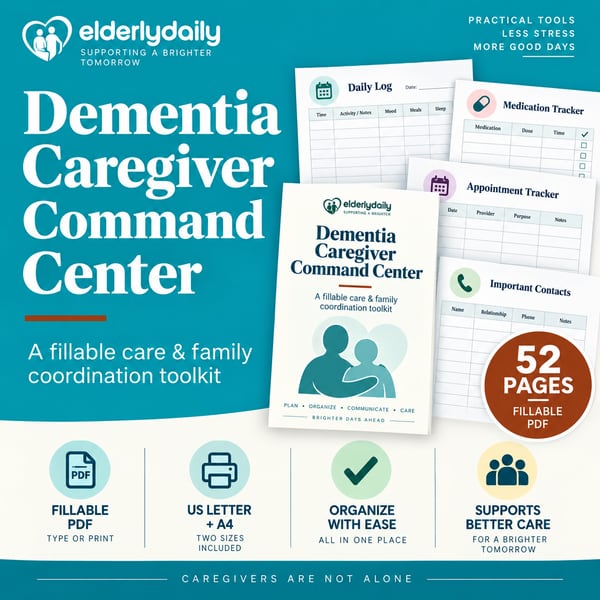
Dementia Caregiver Command Center
- Daily care and medication logs in one place
- Behaviour-pattern tracking, to spot what makes a day harder
- Safety pages and caregiver handoff sheets for family and respite helpers
One-off purchase. Instant download.
Fillable PDF · US Letter + A4

Sponsored Pick
Tracki Mini GPS Tracker
Early-to-mid dementia, where the person will carry something but refuses to wear a device
Check PriceHow to ask (the most important part)
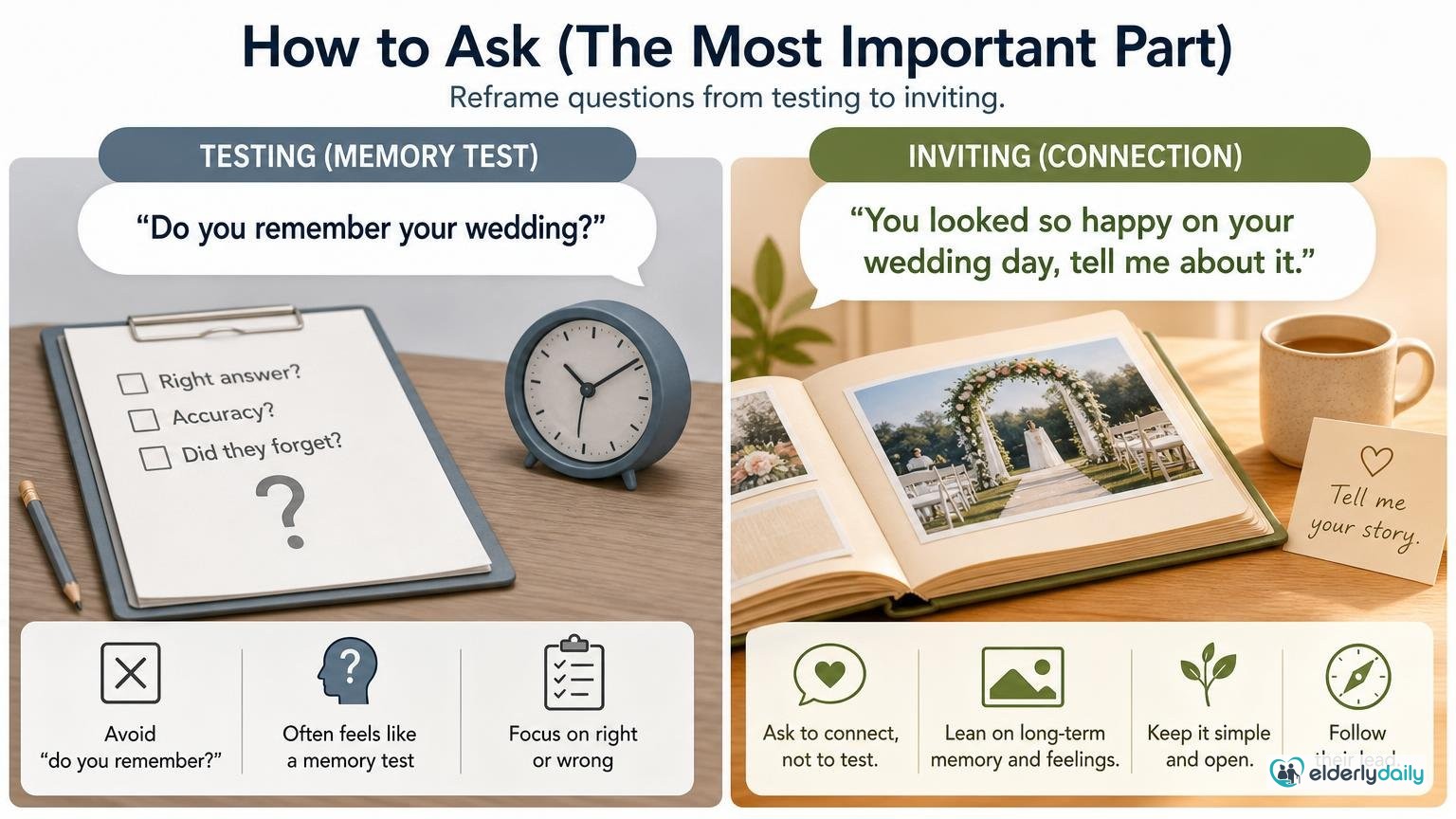
Before the questions themselves, the approach that makes them work:
- Ask to connect, not to test. The aim is a pleasant exchange, not a correct answer — there are no wrong answers, and it does not matter if the details are inaccurate.
- Avoid "do you remember?" and recent-memory questions, which spotlight loss and cause anxiety.
- Lean on long-term memory and feelings — the distant past and emotions are often more accessible and more pleasant.
- Keep it simple and open, one at a time — and give plenty of time to respond.
- Follow their lead and mood — if a topic brings sadness, gently move on; if one brings joy, linger there.
- Enjoy the moment — your warmth and interest matter as much as the words; it is about being together.
Good to know
Reframe every question from "testing" to "inviting." Not "Do you remember your wedding?" (a memory test that can distress) but "You looked so happy on your wedding day — tell me about it" (an invitation into a happy feeling). The reframe changes everything.
Childhood and growing up

Early-life memories are often the most vivid and joyful to revisit:
- "What games did you play as a child?"
- "Did you have any pets growing up?"
- "What was your favourite subject at school?" or "Who was your favourite teacher?"
- "What did you like to do in the summer as a child?"
- "What was your childhood home like?"
- "Did you have brothers and sisters? What were they like?"
These often unlock rich stories and warm feelings from a time that remains accessible.
Family, love, and life
Questions about family and significant life moments invite meaningful connection:
- "How did you meet your husband/wife?" or "What was your wedding day like?"
- "What were your children like when they were small?"
- "What was your favourite family holiday or trip?"
- "What traditions did your family have?"
- "Who was someone you really looked up to?"
- "What are you most proud of in your life?"
Follow the feelings these bring, and enjoy the stories — accuracy is not the point.
Work, skills, and interests
People often light up recalling their working life, talents, and passions:
- "What was your first job?" or "What did you do for work?"
- "What were you really good at?"
- "Did you have any hobbies you loved?"
- "What kind of music did you listen to when you were young?"
- "Were you a good cook? What did you like to make?"
- "What sports or teams did you follow?"
A former baker, gardener, or musician may share wonderful stories — and these link naturally to meaningful activities.
Senses, feelings, and the simple present
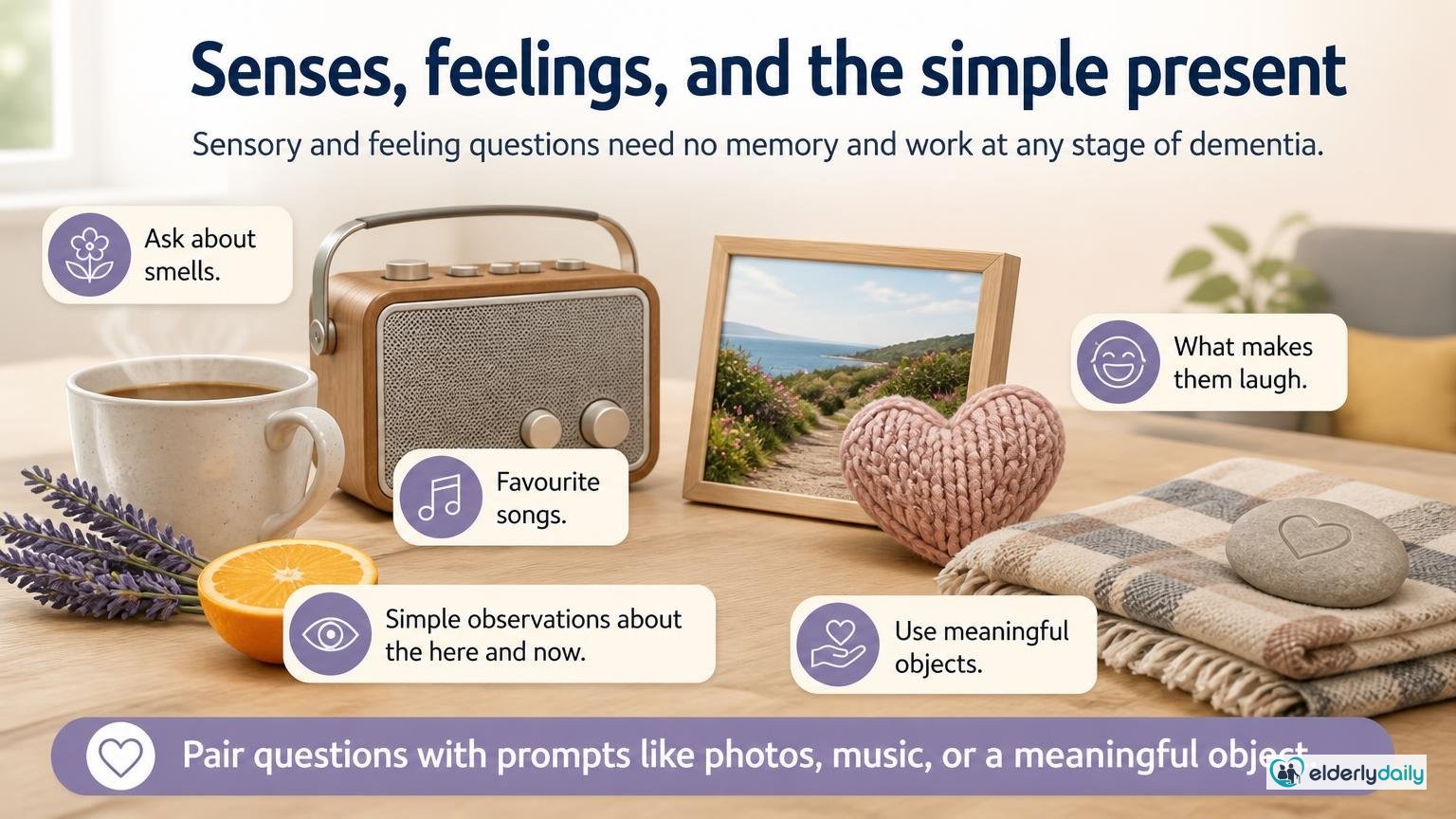
Sensory and feeling-based questions can often work well even in later dementia, and they stay in the comfortable present:
- "What’s your favourite kind of flower?" or "Do you like the sound of the rain?"
- "What food smells remind you of good times?"
- "What always makes you laugh?"
- "What’s your favourite song?" (and play it — music is powerfully connecting)
- "Isn’t this a lovely day?" or simple observations about the here and now.
- "You have a lovely smile — what are you thinking about?"
These invite the person to share a feeling or preference without needing to recall anything, and they work beautifully alongside photos, music, and objects. In later dementia, sensory connection and a warm presence matter most.
Good to know
Pair questions with prompts. Looking at old photos, hearing a favourite song, or holding a meaningful object often unlocks far more than words alone — the senses reach memories that questions cannot.
Frequently asked questions
What are good questions to ask someone with dementia?
Ask questions that spark joy, memory, and connection rather than testing recall: about childhood and youth ("What games did you play as a child?"), family and life ("How did you meet your husband?"), work and skills ("What was your first job?"), and feelings and preferences ("What music do you love?"). Draw on long-term memory and the senses, and remember there are no wrong answers.
What questions should you avoid asking a dementia patient?
Avoid questions that test recent memory ("What did you have for lunch?", "What did we do this morning?") and "do you remember" quizzes, which spotlight loss and cause anxiety. Recent events are hardest hit by dementia, so these questions frustrate and distress. Instead, lean on the distant past, feelings, and the senses, which remain more accessible and pleasant.
How do I have a good conversation with someone with dementia?
Ask to connect, not to test — there are no wrong answers and accuracy does not matter. Keep questions simple and open, ask one at a time, give plenty of time to respond, lean on long-term memory and feelings, and follow the person’s emotional cues (linger on joy, move gently past sadness). Your warmth and presence matter as much as the words.
What can I talk about with a dementia patient who cannot remember much?
Focus on feelings, the senses, and the simple present, which stay accessible even in later dementia: favourite music (and play it), pleasant smells, what makes them laugh, flowers, or observations about the here and now. Pair conversation with prompts like old photos, familiar songs, or meaningful objects, which unlock connection beyond words. A warm, calm presence matters most.
Why is it important to ask the right way, not just the right questions?
Because how you ask determines whether a question brings comfort or anxiety. A memory test ("Do you remember your wedding?") can distress, while an invitation into a feeling ("You looked so happy on your wedding day — tell me about it") brings joy. Reframing every question from testing to inviting, and following the person’s emotional cues, is what makes conversation a source of connection.
Can music and photos help conversation with dementia?
Yes, powerfully — familiar music (especially songs from a person’s youth), old photos, and meaningful objects reach memories and emotions that questions alone cannot, even in advanced dementia. Pairing gentle questions with these sensory prompts often unlocks far richer stories, smiles, and connection, and links naturally to meaningful activities.
