Walker vs Cane for Seniors (Which Mobility Aid Is Best?)

Last Updated: January 2026

Choosing between a walker and a cane isn't just about convenience—it's about preventing falls, maintaining independence, and giving your loved one the confidence to move safely.

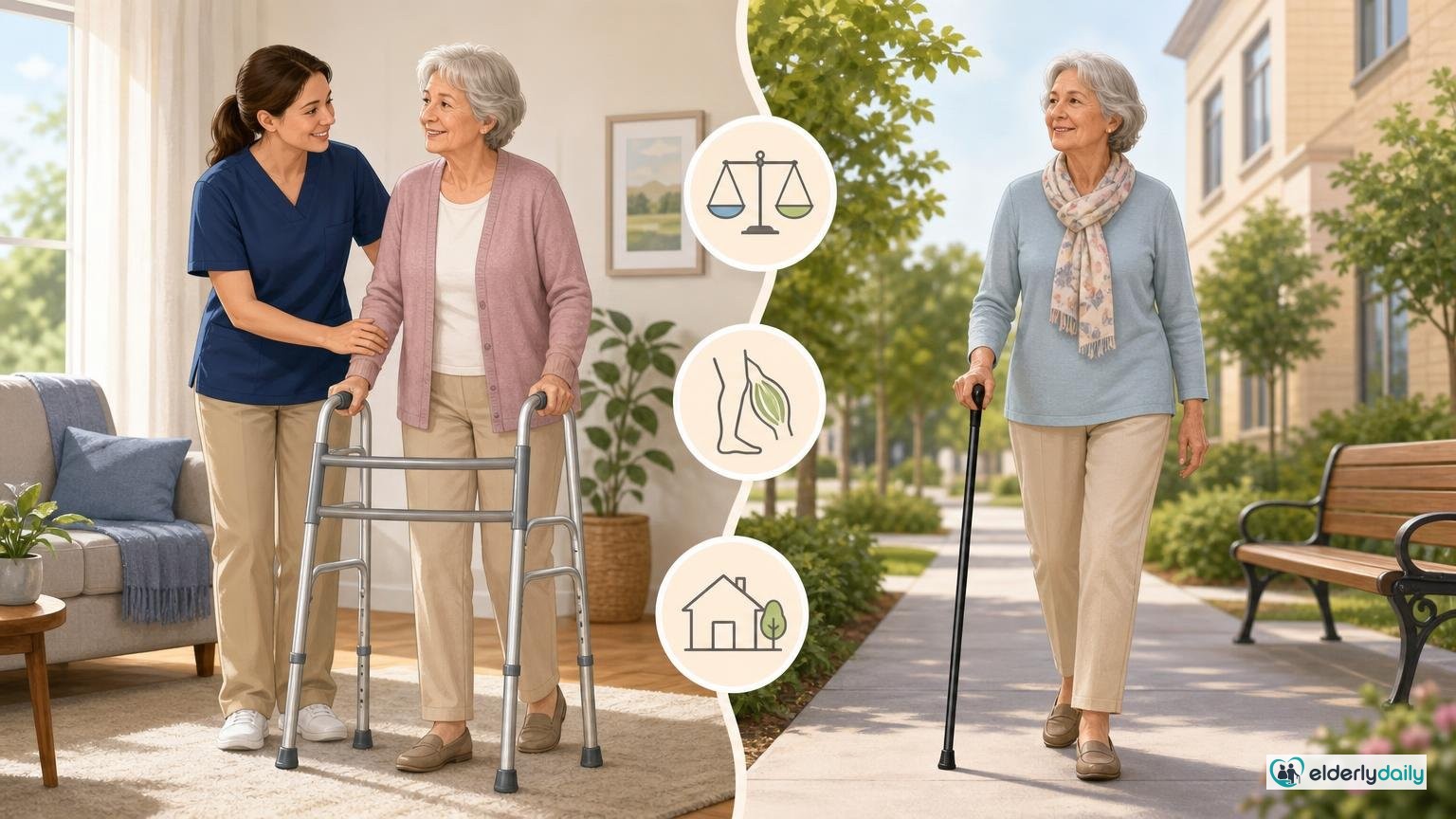
As a caregiver, you need to understand how balance, strength, and daily activities determine which option is safest. A cane offers light support for those with mild stability issues, while a walker provides maximum stability for seniors at higher fall risk.

Senior man comparing walker and cane mobility aids

Choosing the right mobility aid matters

Important Disclaimer

Consult a doctor or physical therapist to determine the best mobility aid for your specific needs. They can assess balance, strength, and walking patterns to recommend the safest option.

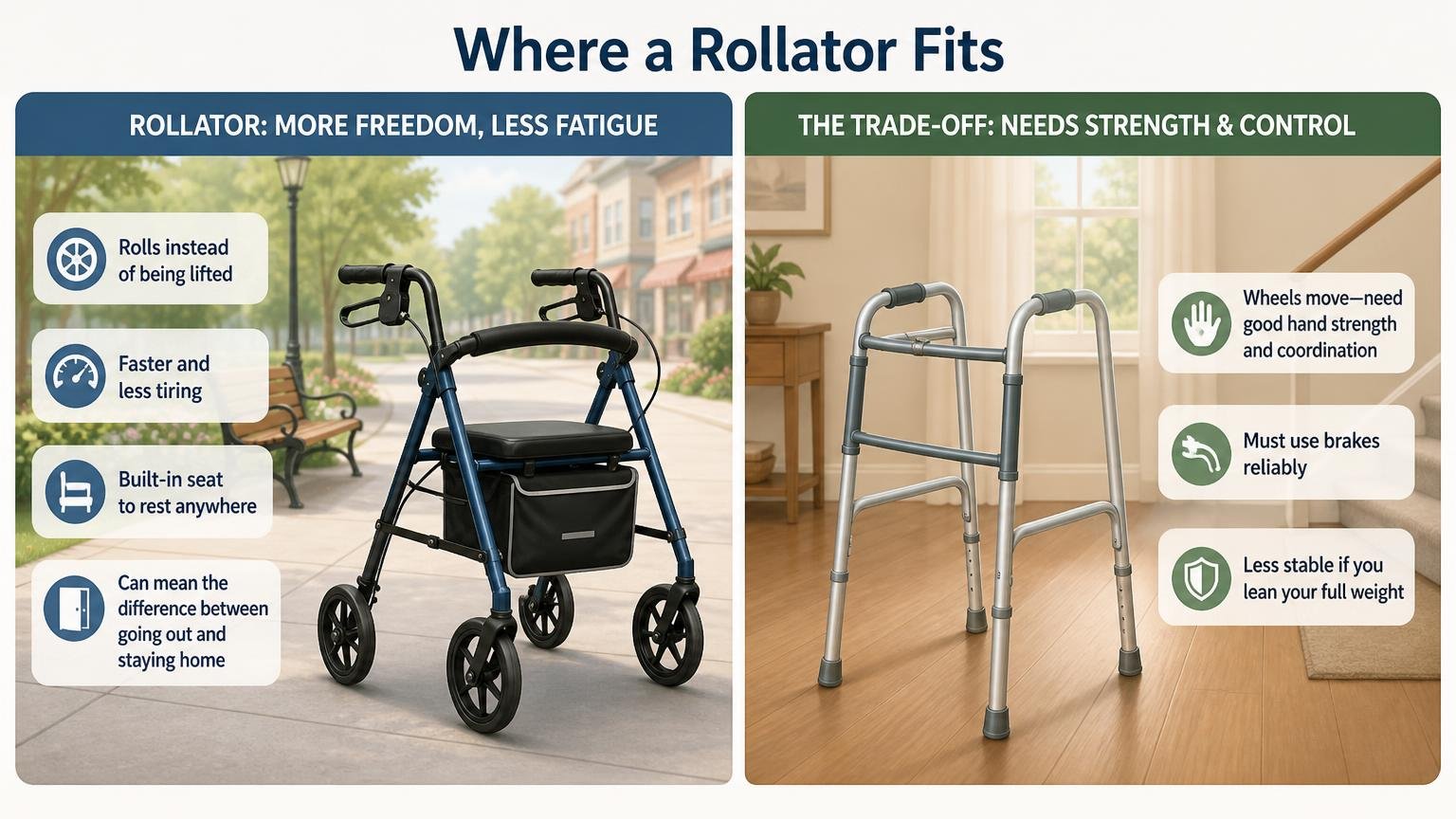
And for those who need both support and the ability to rest during walks, a rollator combines the best of both worlds. This comprehensive guide breaks down the key differences, helps you assess which mobility aid matches your loved one's needs, and provides caregiver-tested recommendations to make the right choice in 2026.

For detailed guidance on proper cane technique, see our complete How to Walk with a Cane Guide. If you're considering a rollator, our Rollator Selection Guide covers everything you need to know. If you're evaluating multiple mobility concerns, our comprehensive fall prevention guide brings everything together in one place.

Quick Answer

  • Cane: Best for mild support when balance is mostly good but needs occasional steadying
  • Walker: Maximum stability for seniors with frequent balance issues or high fall risk indoors
  • Rollator: Best for outdoor independence with built-in seat and storage for longer distances

Key Differences at a Glance

Understanding the core differences helps you choose the safest option for your loved one's specific needs and lifestyle. Each mobility aid serves a different purpose and level of support.

Senior man using cane

Cane

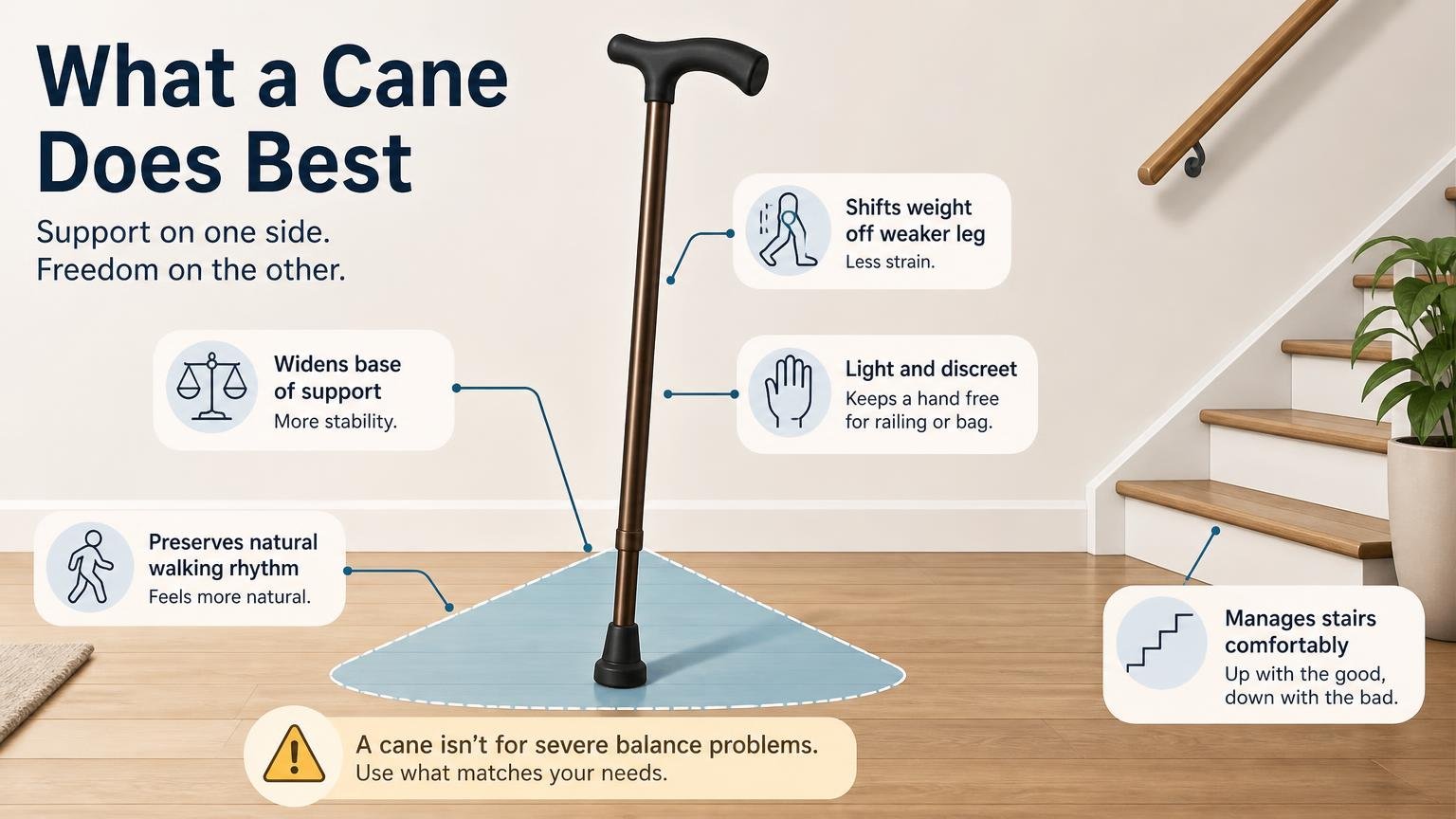
  • Light support for mild balance issues
  • Easy to carry and store
  • Best for short distances
  • One hand remains free
  • Affordable ($15-$50)

Best For:

Seniors who need occasional steadying but have good overall balance

View Best Canes
Senior man using walker

Walker

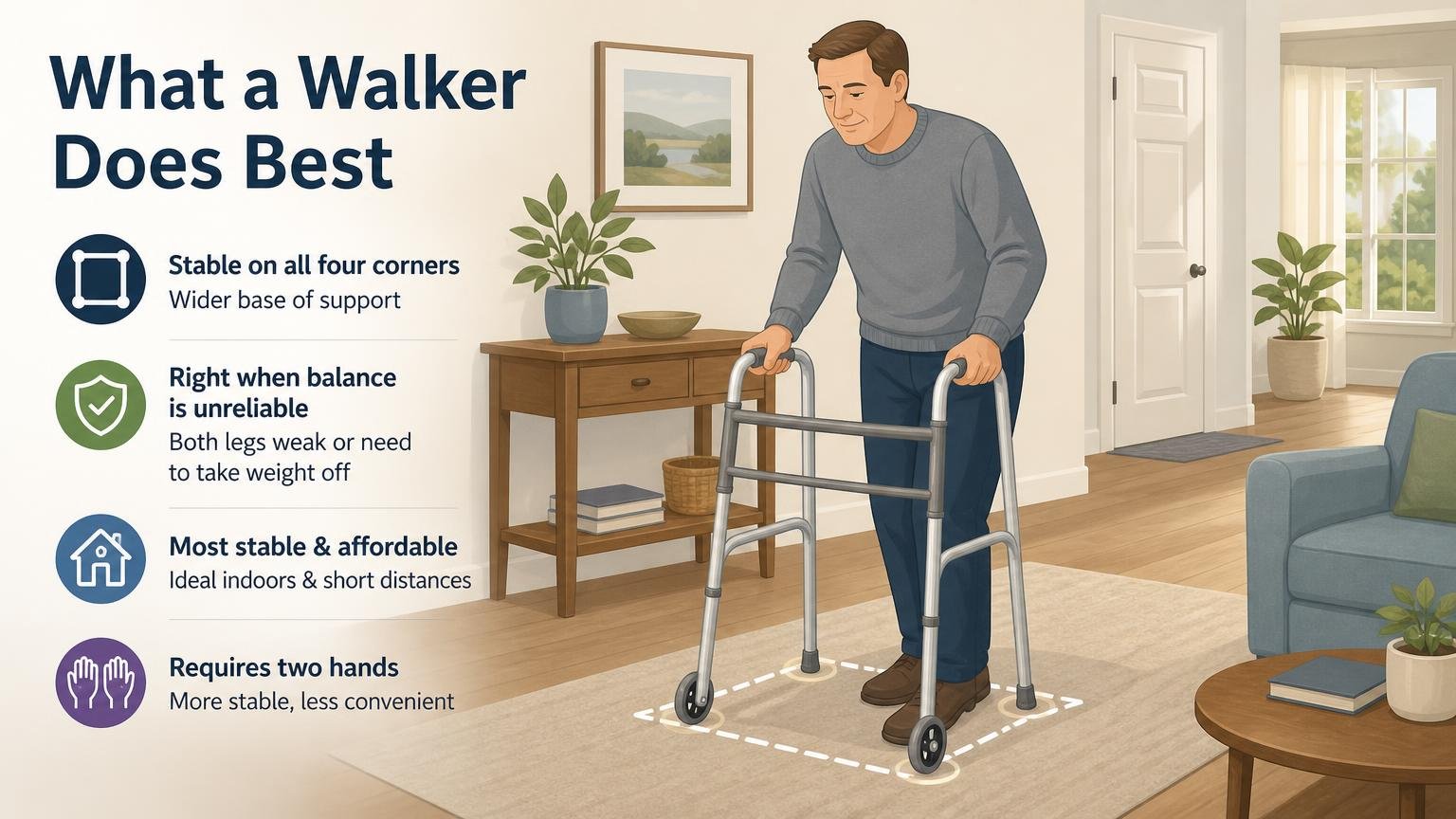
  • Maximum stability with 4 contact points
  • Strongest support indoors
  • Prevents forward falls
  • Requires lifting between steps
  • Moderate cost ($40-$150)

Best For:

Seniors with frequent balance problems or high fall risk

View Best Walkers
Senior man using rollator

Rollator

  • Walker with wheels for easy movement
  • Built-in seat for resting
  • Storage basket included
  • Hand brakes for control
  • Higher investment ($80-$300)

Best For:

Active seniors who need support outdoors and during errands

View Best Rollators

Authority Resource: The CDC reports that proper mobility aids reduce fall risk by up to 30% when correctly fitted and consistently used. Learn more about fall prevention at CDC Falls Prevention

For detailed cane technique, see our How to Walk with a Cane Guide. For rollator selection, visit our Rollator Buying Guide.

Side-by-Side Comparison

Compare key features to determine which mobility aid offers the right balance of support, convenience, and independence.

FeatureCaneWalkerRollator
Stability LevelLight (1 point of contact)Maximum (4 points of contact)High (4 wheels + brakes)
Ease of UseVery easy, minimal learningModerate, requires liftingEasy, smooth rolling
Indoor UseExcellent in tight spacesGood, needs wider doorwaysRequires more space
Outdoor UseLimited on uneven groundDifficult on rough terrainExcellent with large wheels
PortabilityHighly portable, folds easilyBulky, some foldFolds but heavier
Resting OptionNoneNone (unless seat attachment)Built-in padded seat
StorageNoneOptional basketBuilt-in basket/pouch
Cost Range$15 - $50$40 - $150$80 - $300
Best ForMild balance issuesHigh fall risk indoorsActive outdoor seniors

Caregiver Tip:

The "best" mobility aid isn't always the one with the most features—it's the one your loved one will actually use consistently. If a walker feels too bulky and sits unused, a cane they'll carry everywhere is safer.

Who Should Use a Cane?

A cane is the right choice when your loved one needs light support but maintains good overall balance and strength. It's ideal for seniors who want minimal assistance while staying active.

Canes work best for those who can walk independently but feel more confident with something to steady themselves. If your loved one only occasionally feels unsteady—perhaps when turning quickly or standing up—a cane provides just enough support without being cumbersome.

Learn the proper technique in our detailed How to Walk with a Cane Guide, which covers holding position, stair navigation, and balance tips.

Senior man walking confidently with cane at home

Mild Balance Issues

Occasional unsteadiness but can walk independently most of the time

Short Distance Walking

Moving around the house or brief outdoor trips without extended standing

Arthritis-Friendly Grip

Ergonomic handle models reduce hand and wrist strain for arthritic seniors

Stair Navigation

Easier to manage on stairs compared to walkers or rollators

One Hand Free

Allows carrying items, opening doors, or holding a companion's arm

Travel Convenience

Lightweight and portable for car trips, restaurants, and appointments

Ready to Choose the Right Cane?

Our comprehensive cane review covers ergonomic grips, adjustable heights, quad-base stability, and caregiver-tested recommendations for 2026.

Various cane styles for seniors

When a Cane Isn't Enough:

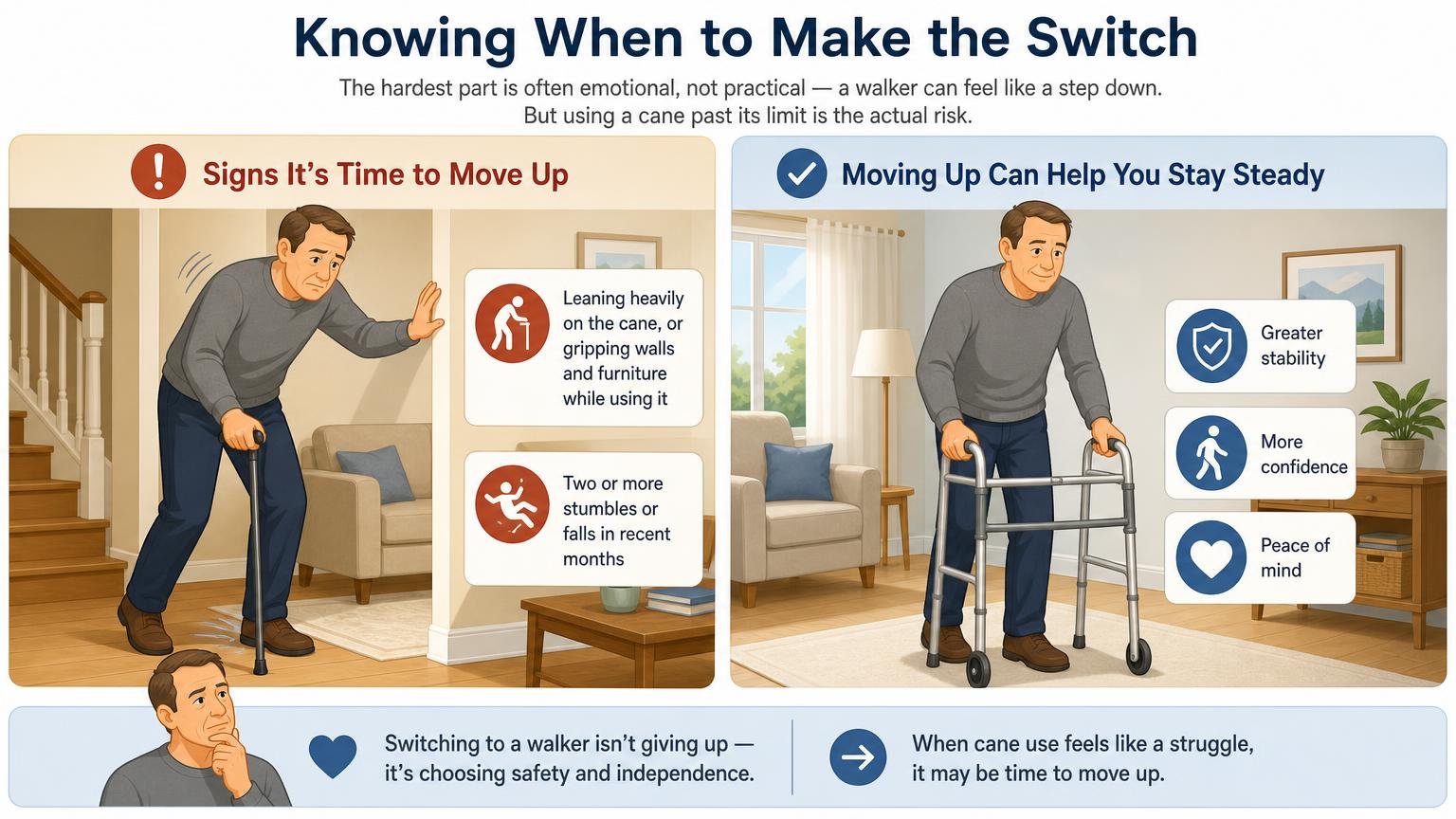
If your loved one leans heavily on furniture, has had recent falls, or feels unsteady even with a cane, it's time to upgrade to a walker for better safety. Don't wait for a fall to happen. See our Best Walkers Review for recommendations.

Senior man using walker safely indoors

Who Should Use a Walker?

A walker provides the highest level of stability for seniors with moderate to severe balance issues or significant fall risk. It's the safest choice for those who need consistent support.

Walkers offer four points of contact with the ground, creating a stable frame that prevents forward falls. They're essential for seniors recovering from surgery, those with neurological conditions affecting balance, or anyone who has experienced multiple falls.

For post-surgery recovery equipment, see our Post-Surgery Equipment Checklist. If outdoor mobility is also important, consider a rollator comparison.

Frequent Fall Risk

History of falls or near-falls that indicate serious balance problems

Post-Surgery Recovery

Hip, knee, or leg surgery requiring maximum support during healing

Weak Legs or Fatigue

Difficulty bearing weight on legs due to weakness or chronic conditions

Indoor Safety Priority

Primary concern is preventing falls while moving around the home

Transitioning from Wheelchair

Building strength and confidence to walk short distances safely

Caregiver Peace of Mind

Maximum stability reduces worry when seniors walk independently

Senior man using walker in kitchen

Find the Perfect Walker for Your Loved One

Our detailed walker review compares standard walkers, two-wheel walkers, and rollators with expert recommendations for different mobility needs.

Standard Walker:

Best for maximum indoor stability. Requires lifting between steps but provides the strongest support for severe balance issues.

Senior using standard walker

Rollator Walker:

Best for outdoor use and longer distances. Wheels make movement easier, and the built-in seat allows resting during walks.

Senior using rollator outdoors
Senior man transitioning from cane to walker with caregiver help

When to Upgrade from Cane to Walker

Mobility needs change over time. Recognizing the warning signs early helps prevent falls and keeps your loved one safe. Don't wait for a serious fall to make the switch.

Critical Warning

If your loved one has fallen in the past 6 months while using a cane, consult their doctor immediately about upgrading to a walker. One fall significantly increases the risk of another.

Physical therapists recommend reassessing mobility aid needs every 6 months or after any health change. Learn more about fall prevention in our Bathroom Fall Prevention Guide.

Frequent near-falls or stumbles

If your loved one catches themselves on furniture or walls multiple times per week, a cane no longer provides enough support.

Increased fatigue while walking

Getting tired quickly or needing to sit down frequently indicates the need for a walker with a seat.

Leaning heavily on the cane

If they're putting significant weight on the cane rather than using it for balance, they need more support.

Fear of walking or avoiding movement

Anxiety about falling often means the current aid isn't providing enough confidence.

Recent illness or surgery

Temporary or permanent strength loss may require upgrading to a walker during recovery.

Vision changes affecting balance

Declining vision increases fall risk and may require the extra stability of a walker.

Senior man using walker independently in kitchen

Walker Enables Independence

Many seniors resist upgrading to a walker, fearing it signals decline. In reality, the right mobility aid enables more independence by reducing fall fear and allowing safe movement throughout the home.

Find the Right Walker
Senior man discussing mobility options with caregiver

Having the Conversation

Approach the topic with empathy. Focus on maintaining independence rather than limitations. Involve them in choosing their new mobility aid to increase acceptance and consistent use.

Complete Mobility Guide

Caregiver Checklist for Choosing

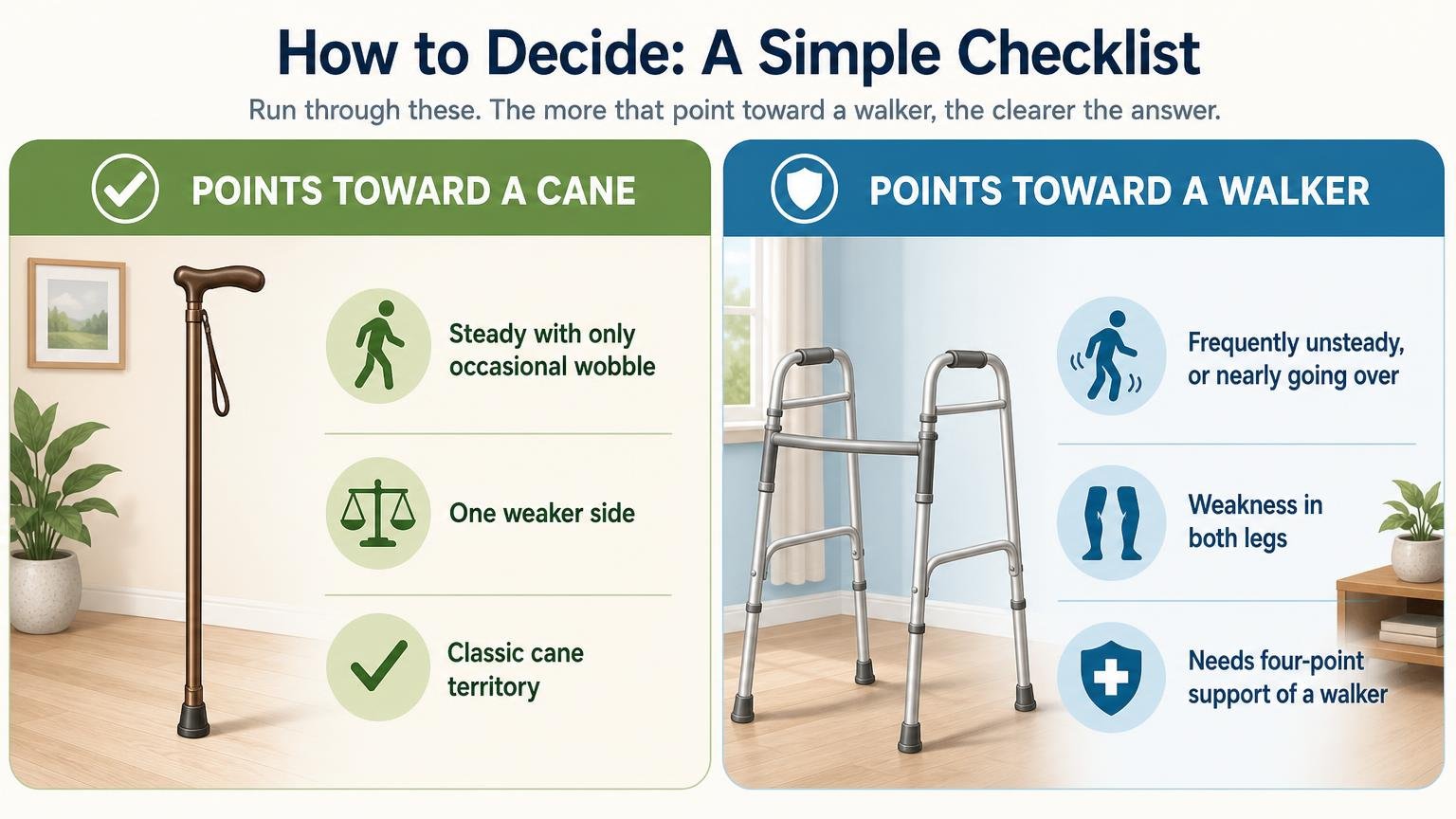
Follow these five steps to select the safest mobility aid based on your loved one's current abilities and home environment.

1

Assess Balance and Strength

Observe how your loved one walks without support. Do they lean on furniture? Have they had recent falls or near-falls? Can they stand from a chair without pushing up with their arms?

Action Step:

If they struggle with any of these, a walker provides safer support than a cane.

2

Check Home Walking Space

Measure doorways (standard is 32 inches) and hallway widths. Standard walkers need 24-26 inches of clearance, while canes only need a few inches.

Action Step:

Narrow spaces may require a cane or slimmer rollator model.

3

Fit Height Correctly

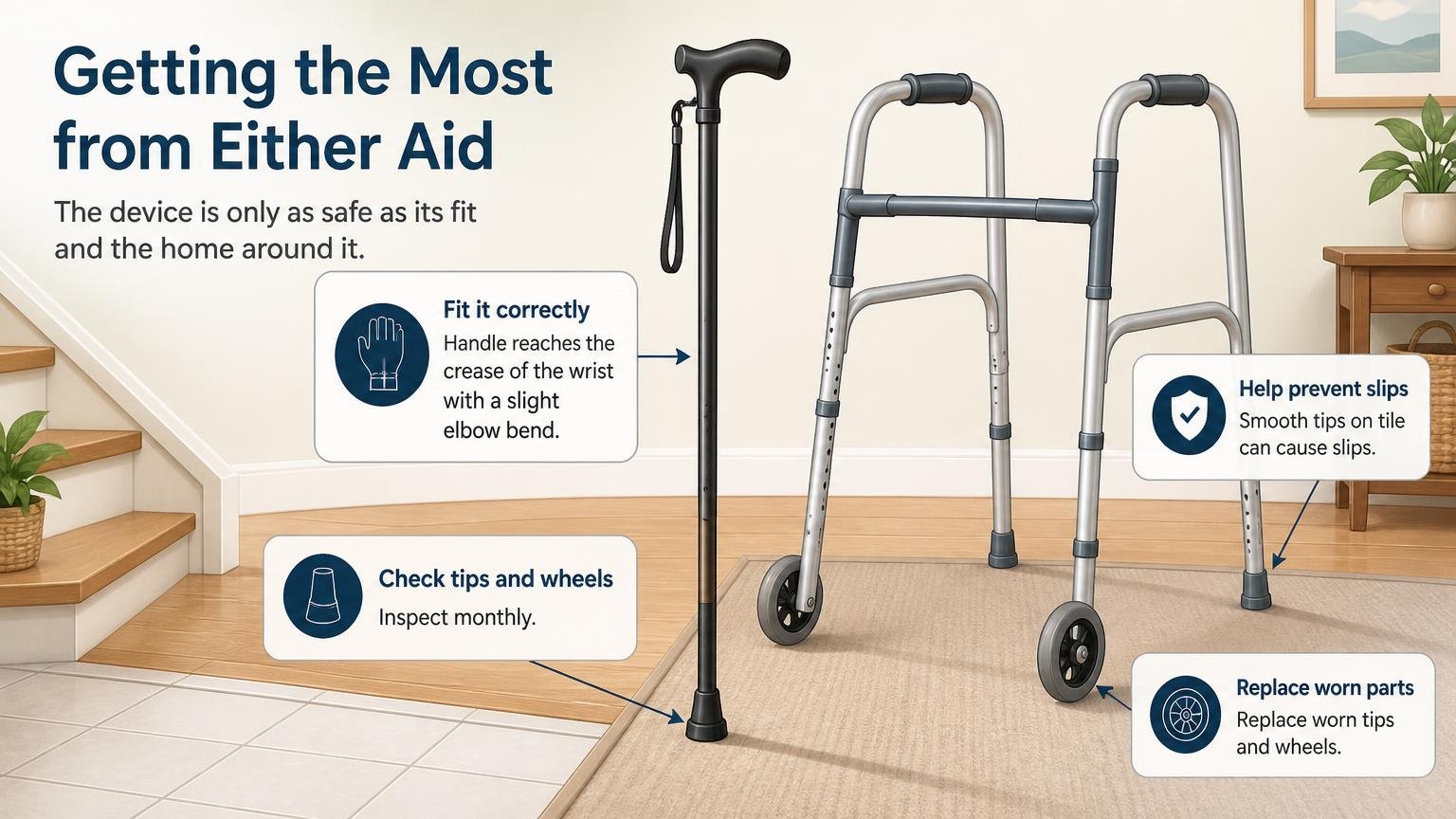
Improper height causes shoulder pain and reduces stability. For canes: handle at wrist height with 15-20° elbow bend. For walkers: handles at wrist height when standing upright inside the frame.

Action Step:

Always choose adjustable models and test the fit before purchasing.

4

Consider Seat Needs Outdoors

Does your loved one get tired during walks? Do they avoid going out because there's nowhere to rest? Rollators with built-in seats solve this problem.

Action Step:

If outdoor independence is important, invest in a quality rollator.

5

Upgrade If Falls Increase

Mobility needs change over time. If a cane user starts having more near-falls or feels less confident, it's time to upgrade to a walker. Don't wait for an actual fall.

Action Step:

Schedule regular mobility assessments with their doctor every 6 months.

Professional Assessment Recommended:

Physical therapists can provide personalized mobility aid recommendations and teach proper usage techniques. Many insurance plans cover these assessments—ask your loved one's doctor for a referral.

Using Mobility Aids Outdoors

Outdoor mobility requires different considerations than indoor use. Understanding how each aid performs outside helps maintain independence for errands, walks, and social activities.

Many seniors use different aids for different situations—a cane for quick indoor trips and a rollator for outdoor walks. This combination approach maximizes both convenience and safety.

Related: Learn more about outdoor safety in our Seniors Living Alone Safety Guide

Senior man using rollator walker outdoors in park

Terrain Considerations

CANE

Works on smooth sidewalks but struggles on gravel, grass, or uneven surfaces

WALKER

Standard walkers are difficult outdoors; rollators with large wheels handle most terrain

Tip: For outdoor use, rollators with 8-inch wheels are the safest choice

Weather Conditions

CANE

Rubber tip can slip on wet surfaces; consider ice pick attachment in winter

WALKER

Tennis ball feet wear quickly outdoors; upgrade to glide caps or wheels

Tip: Check rubber tips and wheel condition before each outdoor trip

Distance & Fatigue

CANE

Best for short distances under 15 minutes; no resting option

WALKER

Rollators with seats allow resting during longer walks

Tip: If walks exceed 10 minutes, choose a rollator with a padded seat

Carrying Items

CANE

One hand free but limited carrying capacity

WALKER

Rollator baskets hold groceries, purses, and medical supplies

Tip: Add a cane holder to rollators for backup support

Senior man walking with cane on sidewalk

Cane for Short Outdoor Trips

Ideal for quick errands, doctor visits, and smooth paved surfaces. Keep walks under 15 minutes.

View Best Canes
Senior man using rollator at grocery store

Rollator for Errands & Shopping

Built-in basket carries groceries while the seat provides rest breaks during longer shopping trips.

View Best Rollators

Mobility Aid Exercises for Strength

Regular practice with mobility aids builds confidence, improves balance, and helps seniors use their cane or walker more effectively. These exercises are recommended by physical therapists.

Safety First

Always have a caregiver nearby during exercises. Stop if you feel dizzy or unsteady. Consult a physical therapist for personalized guidance.

Senior man exercising with walker support
Standing Balance Practice

Standing Balance Practice

Hold the walker or cane while standing still for 30 seconds. Gradually increase time as balance improves.

FREQUENCY

3 times daily

BENEFIT

Builds confidence and core stability

Weight Shifting Exercise

Weight Shifting Exercise

While holding the mobility aid, slowly shift weight from one foot to the other. Hold each position for 5 seconds.

FREQUENCY

10 repetitions, twice daily

BENEFIT

Improves weight transfer during walking

Hallway Walking Practice

Hallway Walking Practice

Practice walking in a straight line down a hallway with the mobility aid. Focus on consistent step length and posture.

FREQUENCY

4-5 trips, twice daily

BENEFIT

Develops proper gait pattern

Turning Practice

Turning Practice

Practice making slow, controlled turns with the mobility aid. Take small steps and keep the aid close to your body.

FREQUENCY

5 turns each direction, daily

BENEFIT

Reduces fall risk during direction changes

Want More Senior Exercise Ideas?

Our daily exercise guide covers gentle movements, chair exercises, and balance training specifically designed for seniors with mobility challenges.

Senior man doing gentle exercise

Recommended Safety Add-ons

Mobility aids work best when combined with other home safety modifications. These additions create a comprehensive fall prevention system throughout the home.

Grab Bars

Install in bathrooms, hallways, and near beds for extra support during transfers

Best Grab Bars Review

Motion Sensor Night Lights

Automatic lighting prevents nighttime falls when using mobility aids in the dark

Best Night Lights Review

Bathroom Fall Prevention

Combine mobility aids with shower chairs, toilet rails, and non-slip mats

Bathroom Safety Guide

Complete Home Safety

Room-by-room modifications that work together with mobility aids

Home Safety Checklist

Transfer Poles

Floor-to-ceiling support for getting in and out of bed safely

Transfer Poles Review

Daily Living Aids

Reachers, sock aids, and dressing tools that reduce bending and reaching

Daily Living Aids Guide

Non-Slip Bath Mats

Essential bathroom safety to prevent slips on wet floors

Best Bath Mats Review

Shower Chairs

Safe seating for bathing when standing is difficult or risky

Best Shower Chairs Review
Senior man using grab bar in bathroom

Bathroom Safety Essentials

The bathroom is the most dangerous room for falls. Combine mobility aids with grab bars, non-slip mats, and shower chairs for complete protection.

Senior bedroom with safety equipment

Bedroom Safety Setup

Nighttime trips to the bathroom are high-risk. Add bed rails, transfer poles, and motion-sensor lights for safe nighttime mobility.

Layered Fall Prevention Works Best

Research shows that combining multiple safety interventions reduces fall risk more effectively than any single solution. A walker plus grab bars plus good lighting creates a safer environment than a walker alone. Start with the mobility aid that fits your loved one's needs, then add complementary safety features room by room.

Visual Decision Guides

Decision Flowchart

Does your loved one have balance issues?
YES
NO

Have they fallen recently?

YES → Walker

NO → Continue

Prevention Only

Consider cane for confidence

Do they need outdoor support?

YES: Rollator
NO: Standard Walker

Stability Level Comparison

Walker (Standard)95%

Maximum stability, 4 fixed contact points

Rollator (Wheeled)85%

High stability with mobility, hand brakes required

Quad Cane60%

Moderate support, 4-point base for extra stability

Standard Cane40%

Light support, requires good balance

No Aid0%

Highest fall risk for those with balance issues

Note: Stability percentages represent relative support levels. Actual effectiveness depends on proper fit, consistent use, and individual mobility needs.

Visual Decision Guide

Senior man walking with cane demonstrating proper technique

Cane Walking Technique

Proper cane usage for mild balance support and confidence while walking.

Learn Cane Technique
Senior man using walker with proper technique indoors

Walker Stability

Maximum support with four contact points for high fall risk seniors.

Best Walkers Review
Senior man using rollator outdoors with built-in seat

Rollator Freedom

Outdoor independence with wheels, seat, and storage for active seniors.

Best Rollators Review

Related Mobility Guides

Explore more caregiver resources to help your loved one stay safe and independent at home.

Frequently Asked Questions

Common questions caregivers ask when choosing between walkers and canes for their loved ones.

Still Have Questions?

Our comprehensive mobility guides cover everything from proper technique to product recommendations. Explore our caregiver resources for more detailed information.

Need More Caregiver Support?

Explore our complete library of caregiver guides covering fall prevention, daily living aids, and home safety modifications.