
Signs Hearing Loss Is Getting Worse in Seniors

Educational guidance, not medical advice. A hearing assessment by an audiologist is the reliable way to measure hearing and guide next steps.
Age-related hearing loss creeps up so gradually that neither the person nor the family notices — until the gaps become obvious. Knowing the signs lets you act before it takes a toll on safety, connection, and the mind.
Key takeaways
- Age-related hearing loss is gradual, so the everyday signs family notice are often the first clue — the person may not realize it themselves.
- Watch for the TV/phone volume creeping up, frequent "what?", struggling in noise or groups, and withdrawing from conversation.
- Worsening hearing matters beyond inconvenience: it is linked to isolation, low mood, higher fall risk, and cognitive strain.
- The response is a hearing test and, if needed, hearing aids or adjustment of existing ones.
- A sudden drop is different and urgent — see sudden hearing loss in seniors.
Quick answer
How do I know if my parent’s hearing is getting worse?
Look for everyday signs: the TV or phone volume creeping up, asking "what?" or for repeats more often, trouble following conversation in noise or groups, mishearing or answering off-topic, complaining that others "mumble," and withdrawing from social situations. Because age-related loss is gradual, family often notices before the person does. The next step is a hearing assessment, and hearing aids if recommended. A *sudden* drop is a separate emergency.
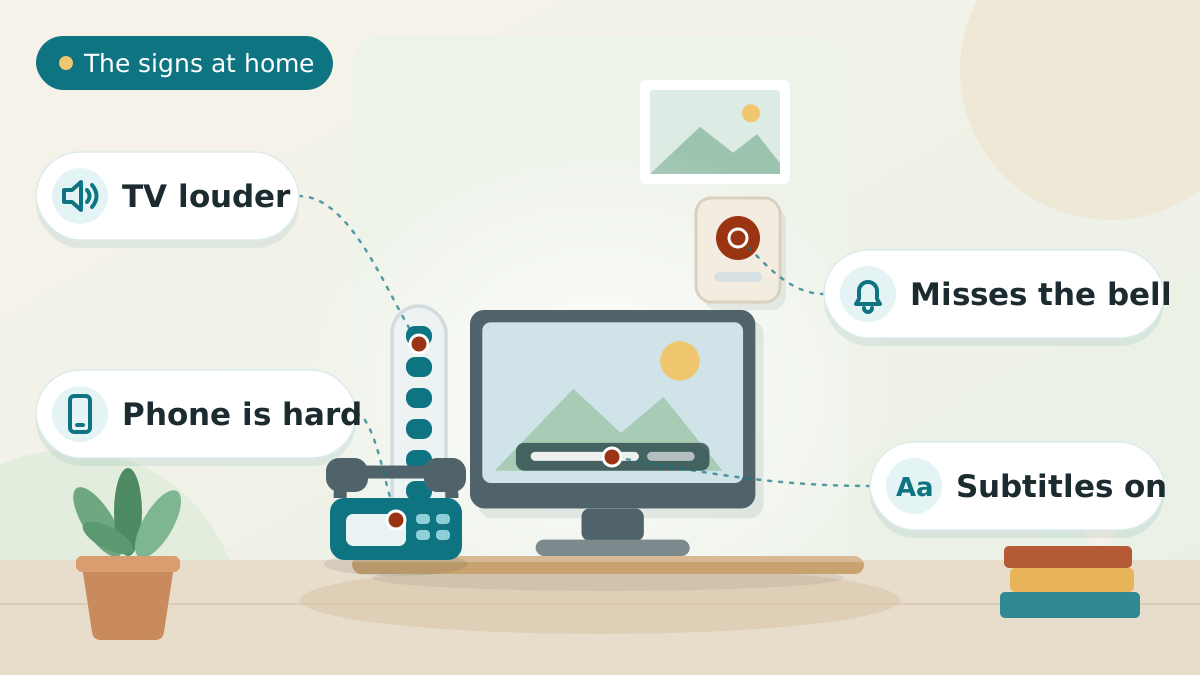
Why worsening hearing is easy to miss
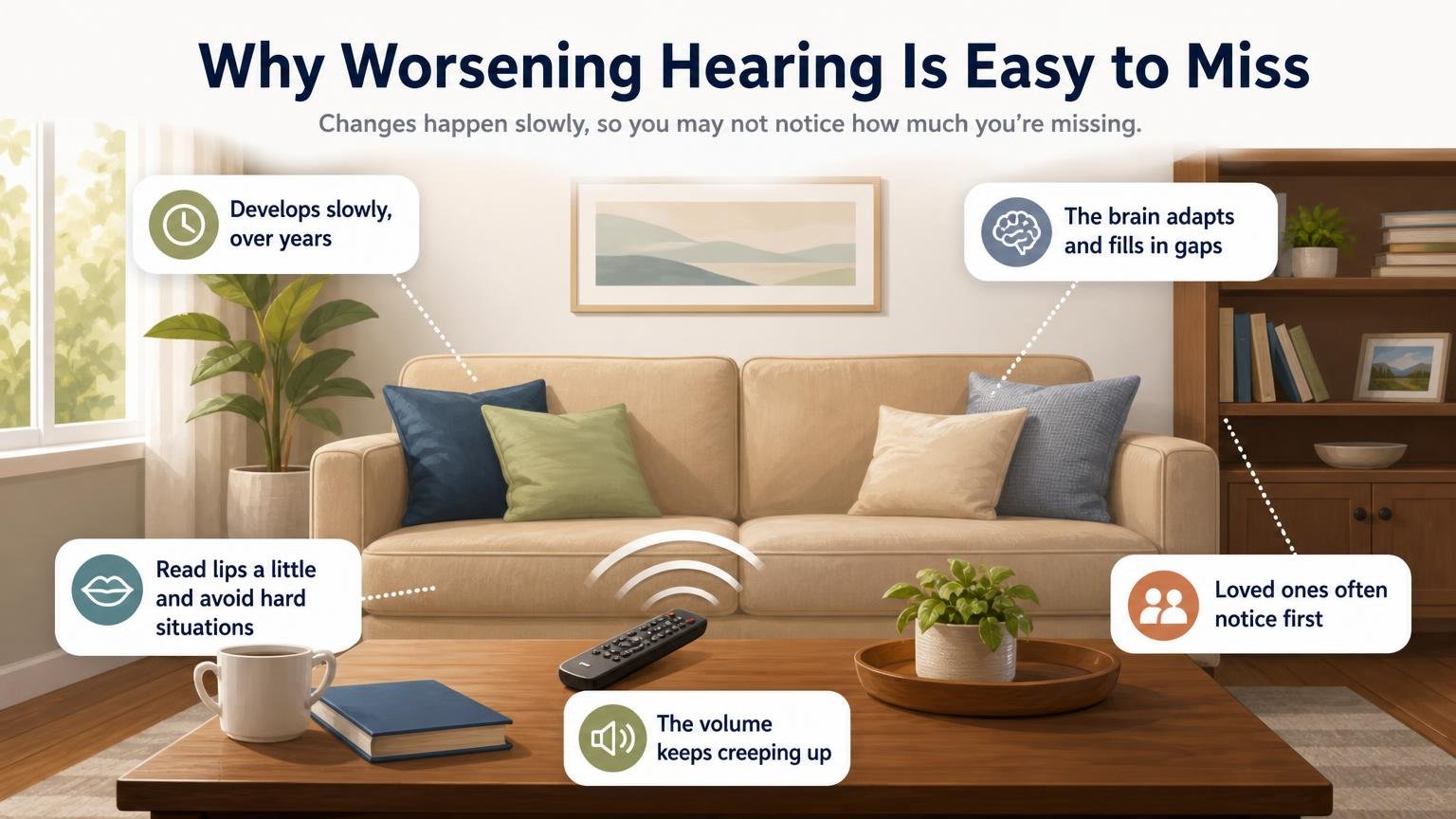
Age-related hearing loss almost always develops slowly, over years. Because the change is so gradual, the brain quietly adapts and the person genuinely may not notice how much they are missing — they simply fill in gaps, read lips a little, and avoid situations that are hard. This is why the observation of family and friends is so valuable: loved ones often spot the decline before the person acknowledges it.
Recognizing the signs early matters, because untreated hearing loss does not just make conversation harder — it is linked to social isolation, low mood, greater fall risk, and added strain on the mind. Catching a worsening trend lets you act before those effects set in.
Everyday signs hearing is getting worse
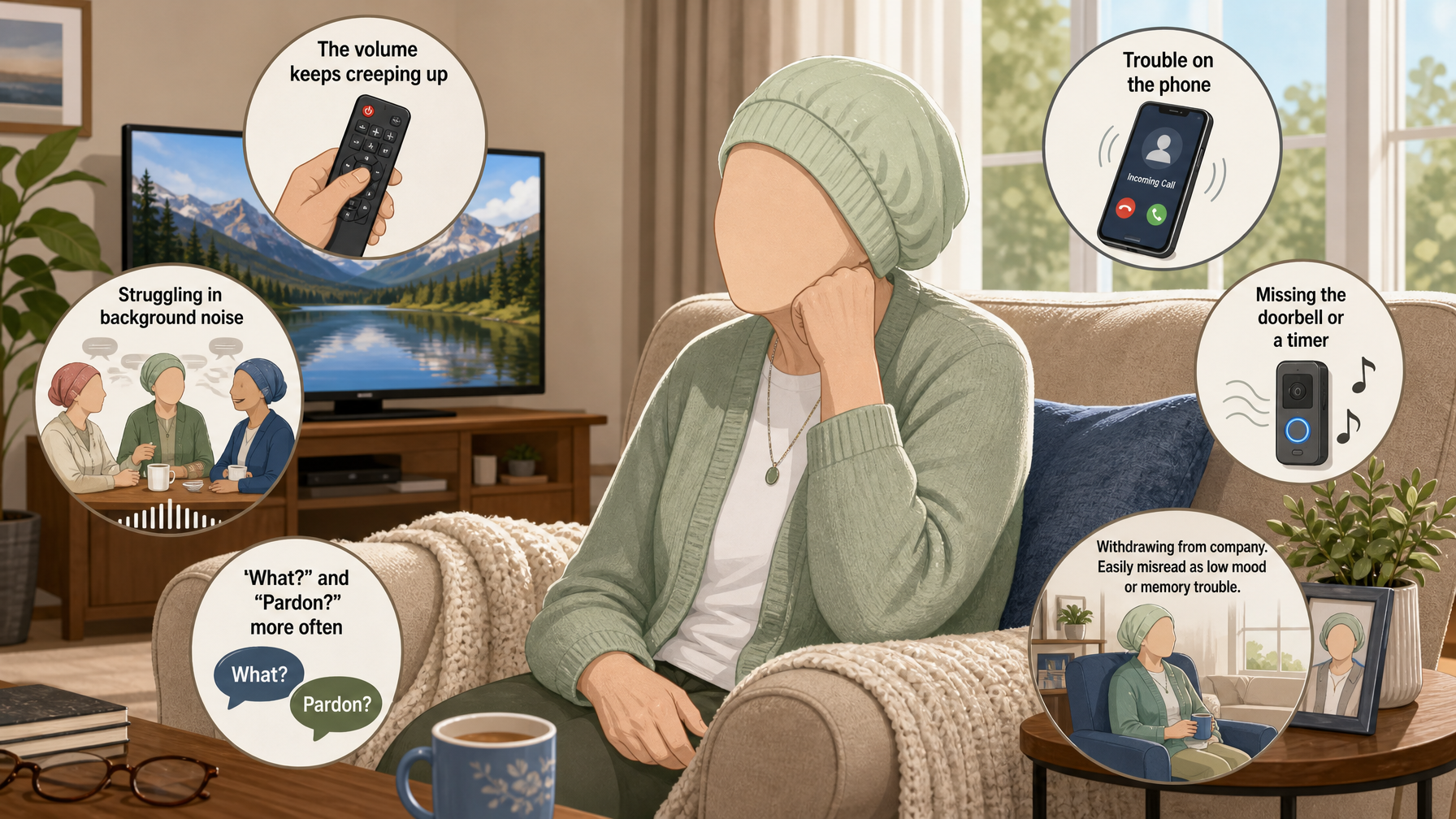
These are the practical signs families most often notice — any pattern of them suggests a hearing check is due:
- The volume keeps creeping up — the TV, radio, or phone is louder than others find comfortable, and getting louder over time.
- "What?" and "pardon?" more often — frequent requests to repeat, or nodding along without really following.
- Struggling in background noise — a restaurant, a gathering, or a group conversation becomes exhausting or impossible, even when one-to-one is okay.
- Mishearing or off-topic answers — responding to something slightly different from what was said.
- "Everyone mumbles" — a common way the person experiences their own loss, especially with higher-pitched voices.
- Trouble on the phone, or favouring one ear.
- Missing sounds — the doorbell, a timer, a knock, or someone calling from another room.
- Withdrawing — begging off social events, going quiet in groups, or seeming less engaged, which can be mistaken for low mood or even memory issues.
Good to know
Withdrawal is easy to misread. Someone who has "gone quiet" or seems disengaged at family gatherings may not be low or confused — they may simply be unable to follow the conversation. Hearing is always worth checking.
Why it matters to act
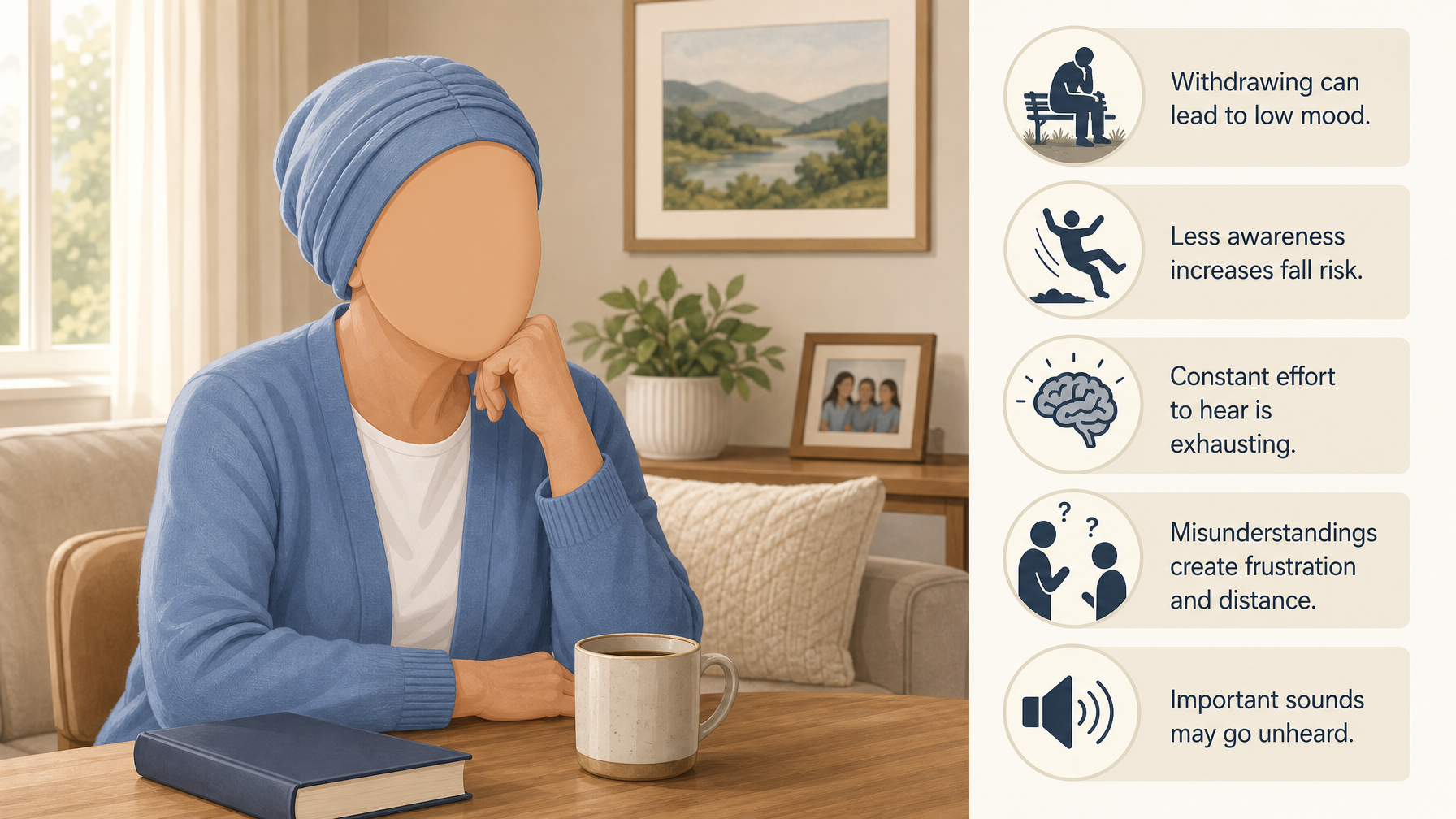
It is tempting to treat hearing loss as a minor inconvenience to live around, but worsening hearing has real consequences that make early action worthwhile:
- Isolation and mood — when conversation becomes hard, people withdraw, and social isolation and depression can follow.
- Safety and falls — hearing loss reduces awareness of surroundings and is independently linked to a higher fall risk.
- Cognitive strain — the constant effort of straining to hear taxes the brain, and untreated hearing loss is associated with faster cognitive decline.
- Relationships — repeated misunderstandings and shouting wear on family relationships and shared life.
- Missed safety alerts — not hearing alarms, doorbells, or someone calling for help.
Addressing hearing is not vanity — it can help protect connection, safety, and the mind.
What to do about worsening hearing
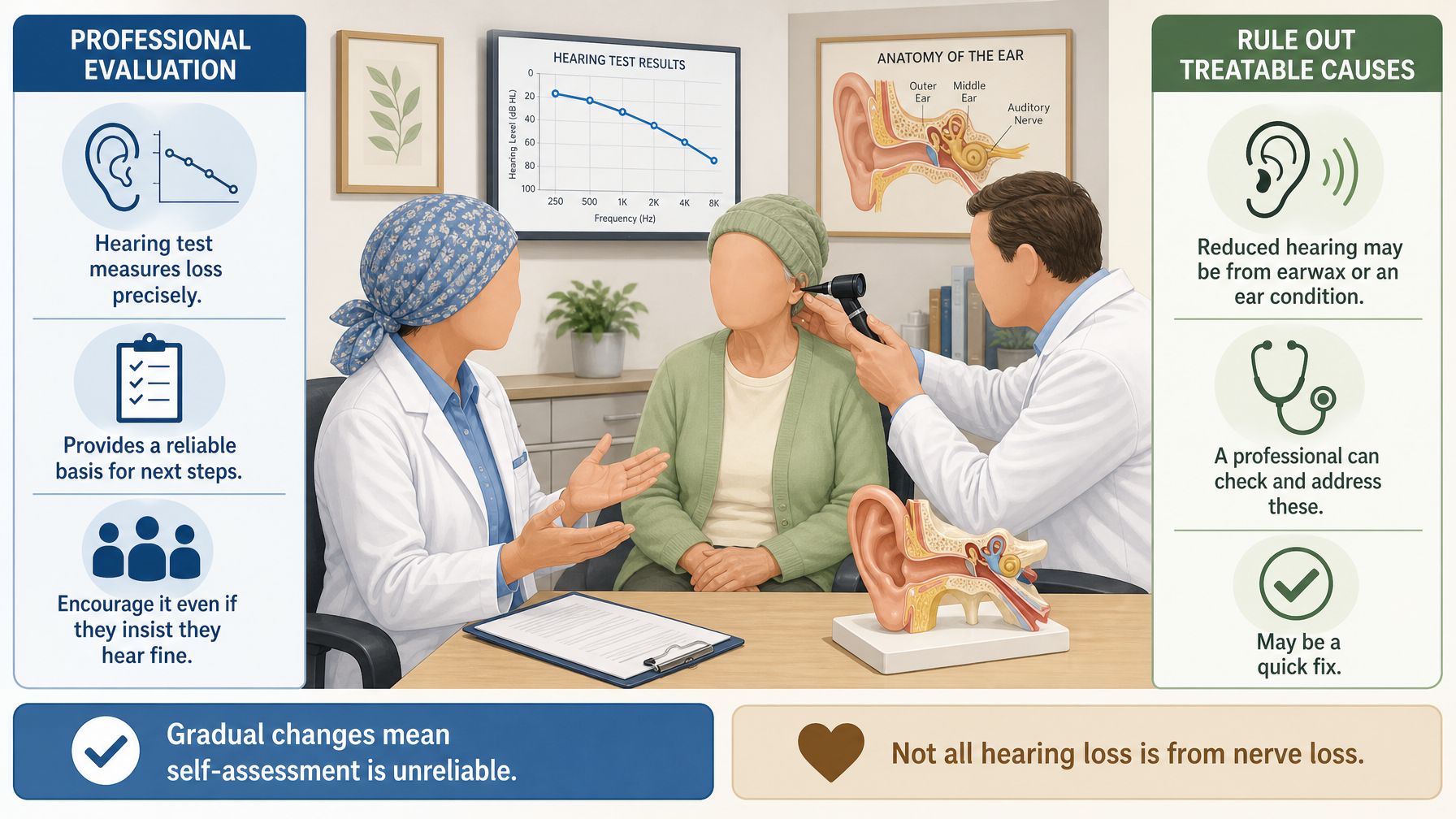
If you are noticing these signs, take these steps:
- 1
Arrange a hearing assessment
A test by an audiologist measures the type and degree of loss precisely — the reliable basis for any next step. Encourage it even if the person insists they hear fine; the gradual nature means self-assessment is unreliable.
- 2
Rule out simple causes
Sometimes reduced hearing is from earwax or an ear condition rather than nerve loss; a professional can check and address these, which may be a quick fix.
- 3
Consider hearing aids
If loss is confirmed, modern hearing aids can transform daily life. Explore hearing aids for the elderly and lower-cost OTC hearing aids.
- 4
Re-check existing aids
If the person already wears aids but is struggling more, the aids may need adjustment, servicing, or updating to match the current level of hearing.
- 5
Support communication at home
Alongside devices, communication strategies and environment changes help — see hearing and vision support at home and consider large-button amplified phones.
When they resist getting help
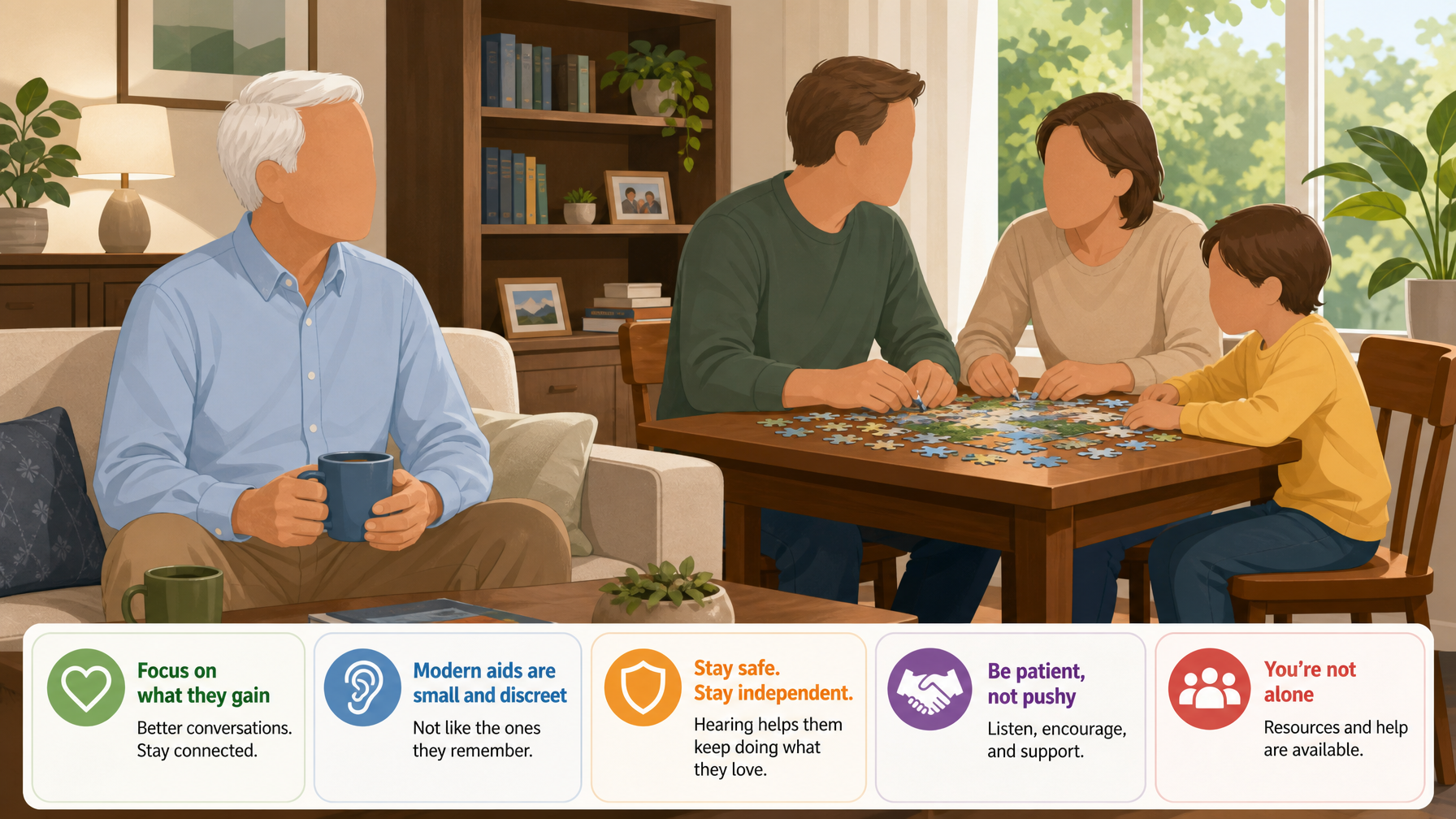
Many people resist acknowledging hearing loss or wearing aids, out of denial, stigma, or past bad experiences with old devices. Gentle persistence helps:
- Frame it around what they will gain — hearing grandchildren, enjoying gatherings, staying independent — rather than around a deficit.
- Note that modern hearing aids are small, discreet, and far better than the bulky devices they may remember.
- Connect it to things they care about, including staying safe and independent at home.
- Be patient and supportive rather than nagging; the same compassionate approach in when an elderly parent refuses help applies here.
Safety first
One thing that is never "wait and see": if hearing drops suddenly, especially in one ear, treat it as a medical emergency and seek urgent care — see sudden hearing loss in seniors.
Frequently asked questions
What are the signs that hearing loss is getting worse?
Common signs family notice include the TV or phone volume creeping up, more frequent "what?" and requests to repeat, difficulty following conversation in noise or groups, mishearing or off-topic answers, complaining that others mumble, trouble on the phone, missing sounds like the doorbell, and withdrawing from social situations. Because age-related loss is gradual, others often notice before the person does.
Why doesn’t my parent realize their hearing is worsening?
Age-related hearing loss develops so slowly that the brain adapts and the person fills in gaps without realizing how much they are missing. They may also avoid difficult situations without connecting it to hearing. This is why the observations of family are so valuable and why a formal hearing test — rather than self-assessment — is the reliable measure.
Why is it important to treat worsening hearing loss?
Untreated hearing loss is linked to social isolation and depression, a higher risk of falls (through reduced awareness of surroundings), added cognitive strain and faster cognitive decline, relationship strain, and missing safety alerts. Addressing it can help protect connection, safety, and the mind — it is far more than a minor inconvenience.
What should I do if my parent’s hearing is getting worse?
Arrange a hearing assessment with an audiologist to measure the loss, rule out simple causes like earwax, and consider hearing aids if loss is confirmed. If they already wear aids but struggle more, have the aids checked and adjusted. Support communication at home with strategies and, if helpful, amplified phones. A sudden drop, however, is an emergency needing urgent care.
How can I convince my parent to get hearing aids?
Frame it around what they will gain — hearing grandchildren, enjoying gatherings, staying safe and independent — rather than around a deficit, and reassure them that modern aids are small, discreet, and far better than older devices. Be patient and supportive rather than nagging, connecting the help to things they genuinely care about.
Is gradual hearing loss the same as sudden hearing loss?
No. Gradual age-related hearing loss develops over years, affects both ears fairly equally, and is not urgent (though it should be assessed and treated). Sudden hearing loss is a rapid drop over hours to a few days, usually in one ear, and is a medical emergency — get it checked the same day, because treatment works best when it starts within the first 72 hours. The two must not be confused.
