
5 Best Eating Aids for Seniors
 By Kutubuddin, Founder & Senior Care Researcher Updated October 2026
In this guide
 Best OverallSpecial Supplies Weighted & Bendable Utensils
 Best for Significant TremorGYENNO Parkinson Spoon
 Best for One-Handed EatingVive Spill-Proof Scoop Plate, 9" (2-Pack)
 Best for Limited Neck MovementProvidence Spillproof Nosey Cup, 12 oz
 Best for Arthritis & One-Handed CuttingSpecial Supplies Adaptive Utensils, 5-Piece Non-Weighted
- What to look for
- Frequently asked questions
Adaptive eating aids let a senior feed themselves with dignity despite tremors, weak grip, or limited hand use — protecting both independence and nutrition, since meals that become frustrating or messy often lead to eating less.
We may earn a commission when you buy through links on this page. Read our affiliate disclosure.
Top 5 Picks — Find Your Situation
#1 · Best Overall
Special Supplies Weighted & Bendable UtensilsBest for: Most seniors with weak grip, mild tremor, or limited range
#2 · Best for Significant Tremor
GYENNO Parkinson SpoonBest for: Moderate-to-severe tremor from Parkinson's or essential tremor, where weighted utensils fall short
#3 · Best for One-Handed Eating
Vive Spill-Proof Scoop Plate, 9" (2-Pack)Best for: One-handed eating after a stroke, or anyone who pushes food off the plate
#4 · Best for Limited Neck Movement
Providence Spillproof Nosey Cup, 12 ozBest for: Seniors with limited neck, shoulder or wrist movement
#5 · Best for Arthritis & One-Handed Cutting
Special Supplies Adaptive Utensils, 5-Piece Non-WeightedBest for: Arthritis or weak grip without tremor, and anyone cutting food one-handed
Different challenges need different tools: weighted or stabilizing utensils for tremors, built-up handles for arthritis, a scoop plate and non-slip base for one-handed eating after a stroke, and a cut-out nosey cup for drinking. Our overall pick is a weighted and bendable utensil set, the Special Supplies Weighted & Bendable Utensils. Below is the best aid for each need, plus how to match the tool to the condition — and why these aids protect nutrition as much as dignity.
A closer look at our top pick: the Special Supplies Weighted & Bendable Utensils
Special Supplies Weighted & Bendable Utensils
Best for: Most seniors with weak grip, mild tremor, or limited range
- Set
- 4-piece (fork, spoons, knife)
- Handles
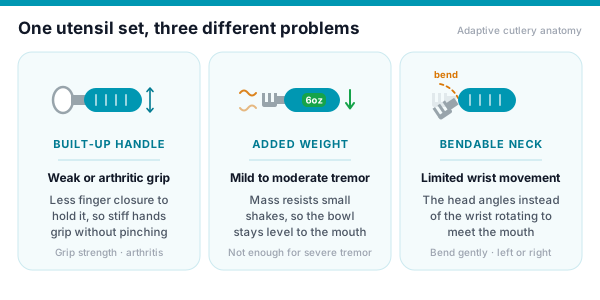
- Thick, built-up grip
- Weight
- Weighted (steadies mild tremor)
- Necks
- Bendable to any angle
Independently researched · Updated October 2026
The Special Supplies weighted and bendable set wins because one affordable purchase addresses the most common eating difficulties together. The thick, built-up handles are easy for weak or arthritic hands to hold; the added weight steadies mild-to-moderate tremor; and the bendable necks adjust the angle for limited wrist or arm range. It covers a fork, spoons, and a knife, and it's dishwasher-safe — versatile and practical for daily use.
It's the sensible default because it helps grip, tremor, and range all at once, rather than solving just one. The honest limits are clear: the weight helps mild-to-moderate but not severe tremor, the necks should be bent gently to avoid wear, and hand-washing prolongs their life even though they're dishwasher-safe. For significant tremor, an electronic stabilizer such as the GYENNO spoon is the better tool; for most people, this set is the best place to start.
What we love
- Helps grip, tremor, and range at once
- Comfortable thick handles
- Versatile and practical
- Easy to clean
Things to consider
- Weight helps mild-moderate, not severe tremor
- Bend gently to avoid wear
- Hand-washing prolongs life
Right for you if
- ✓You have weak grip, mild tremor, or limited range
- ✓You want one set that helps with several issues
- ✓You'd like comfortable, thick handles
- ✓You want an affordable, dishwasher-safe option
Maybe skip it if
- !You have significant tremor — an electronic stabilizer suits better
- !You eat one-handed — add a scoop plate and a curved knife
- !Tipping the head back is the difficulty — a cut-out nosey cup helps
- !Swallowing itself is the problem — that needs a clinician, not a product
What owners consistently report
Common praise
- +Owners report steadier, more comfortable eating
- +The thick handles are easy to hold
- +The versatility is widely appreciated
Common gripes
- –Weight helps mild-moderate, not severe tremor
- –Bend the necks gently to avoid wear
- –Hand-wash to prolong their life
Getting started
- →Bend each utensil to the person's comfortable angle
- →Pair with a non-slip mat or suction plate
- →Start with the utensil they use most
How it compares
The GYENNO stabilizing spoon is the better choice for significant tremor — it actively counteracts shaking that weighted utensils cannot, and its app lets you test it against your own tremor before buying, though it costs far more. The Special Supplies set is the affordable all-rounder for milder needs. Choose the GYENNO for severe tremor, the weighted set for everyday grip and mild shake.
How we picked
We compared 5 options. Rather than rank similar products, we looked across the eating challenges seniors face — tremor, weak grip, one-handed use, and drinking — and chose a strong, real aid for each. We assessed them on grip, weight, stability, spill resistance, and ease of cleaning, drawing on manufacturer specs, occupational-therapy guidance, and owner feedback — not hands-on lab testing. The aim is to match the aid to the specific difficulty at the table.
Reviewed by Kutubuddin — who researches senior-care products and the real-world needs of caregivers and older adults.
Other picks, reviewed
GYENNO Parkinson Spoon
The answer for significant tremor, where added weight is not enough. A smart chip and high-precision digital motor detect shaking and steady the spoon head, and the companion app graphs tremor data over time so a family can see trends. Its best feature costs nothing: you can download the GYENNO SPOON app and run a usability test on your own tremor before buying, which is a rare thing to be offered on a purchase this size.
What we like
- Works for tremor too strong for weighted utensils
- The pre-purchase test reduces the risk
- Tremor data is genuinely useful at appointments
Keep in mind
- Still a significant purchase
- Takes practice — eating has to be relearned a little
- The listing publishes no battery-life figure
Key features
- Test it against your own tremor before purchase
- Active stabilization, not just added weight
- Tremor trends visible to family and clinicians
- Improves over time via firmware updates
- Type
- Electronic stabilizing handle
- Action
- Smart chip and digital motor steady the spoon head
- App
- Graphs tremor data over time
- Updates
- Firmware and algorithms update over the air
- Try first
- App-based usability test before you buy
Vive Spill-Proof Scoop Plate, 9" (2-Pack)
The pick for eating with one hand, after a stroke or with poor coordination. A high, sloped inner wall lets the person push food onto the fork or spoon instead of chasing it off the edge, and a non-slip ring underneath keeps the plate steady on the table. The bright blue colour is there for contrast — high-contrast tableware is a long-standing occupational-therapy approach for people who struggle to distinguish food from the plate, which matters in dementia care.
What we like
- Simple physics that genuinely help one-handed meals
- Sturdy enough for daily use
- Comes as a pair, so one is always clean
Keep in mind
- Non-slip, not suction — it resists sliding rather than locking down
- A plate only, so pair it with an adaptive utensil
- No matching bowl in this set
Key features
- Sloped wall to push food against
- Non-slip base keeps the plate put
- High-contrast blue aids food recognition
- Two plates per set
- Microwave and dishwasher safe
- Design
- High sloped scoop wall
- Base
- Non-slip ring, non-skid padded bottom
- Set
- 2 plates, 9 in
- Material
- Food-grade polypropylene
- Care
- Microwave and dishwasher safe
Providence Spillproof Nosey Cup, 12 oz
The choice when tipping the head back is the problem. A cut-out on one side clears the nose, so the person can finish a drink without extending the neck or lifting the shoulder — which is what makes it useful after a stroke, with cervical fusion, or with Parkinson's. Note the brand name: Providence Spillproof is the manufacturer, not a description. This is an open cup with no lid.
What we like
- Solves a specific problem nothing else solves
- See-through body helps with assisted drinking
- Inexpensive
Keep in mind
- An open cup — despite the brand name, it has no lid or spill protection
- Specialised shape, smaller than a mug
- Not insulated
- If swallowing itself is the difficulty, ask for a speech and language therapy assessment rather than choosing a cup
Key features
- Cut-out clears the nose so the neck stays neutral
- Transparent, so a helper can see the fluid level
- Light and easy to hold
- Dishwasher-safe
- Rim
- Nose cut-out (no head tilt)
- Capacity
- 12 oz
- Material
- Transparent plastic, blue/green tint
- Movement
- Drink with little or no shoulder movement
- Care
- Dishwasher-safe
Special Supplies Adaptive Utensils, 5-Piece Non-Weighted
The pick for arthritis without tremor, where the issue is grip rather than shaking. Same wide, silicone-ridged handles as our overall pick but without the added weight, so there is less strain on stiff hands and wrists. It also quietly solves a problem the rest of this list doesn't: the set includes a curved knife, which lets someone cut food using a rocking motion with one hand.
What we like
- Easier on stiff hands than weighted sets
- The curved knife is a real one-handed solution
- Same handle design as our overall pick
Keep in mind
- Not weighted, so little help for tremor
- Bulkier than standard cutlery
- Handles are fixed, not bendable
Key features
- Wide handles improve dexterity and control
- Light, so less strain than weighted cutlery
- Curved knife for one-handed cutting
- Five pieces cover most meals
- Dishwasher-safe
- Set
- 5-piece (fork, knife, curved knife, dinner spoon, soup spoon)
- Handles
- Wide, non-slip silicone
- Weight
- Non-weighted (light)
- One-handed
- Curved knife cuts with a rocking motion
- Care
- Dishwasher-safe stainless steel
What to look for
Match the aid to the challenge
Eating difficulties have distinct causes, and each has its own tool.
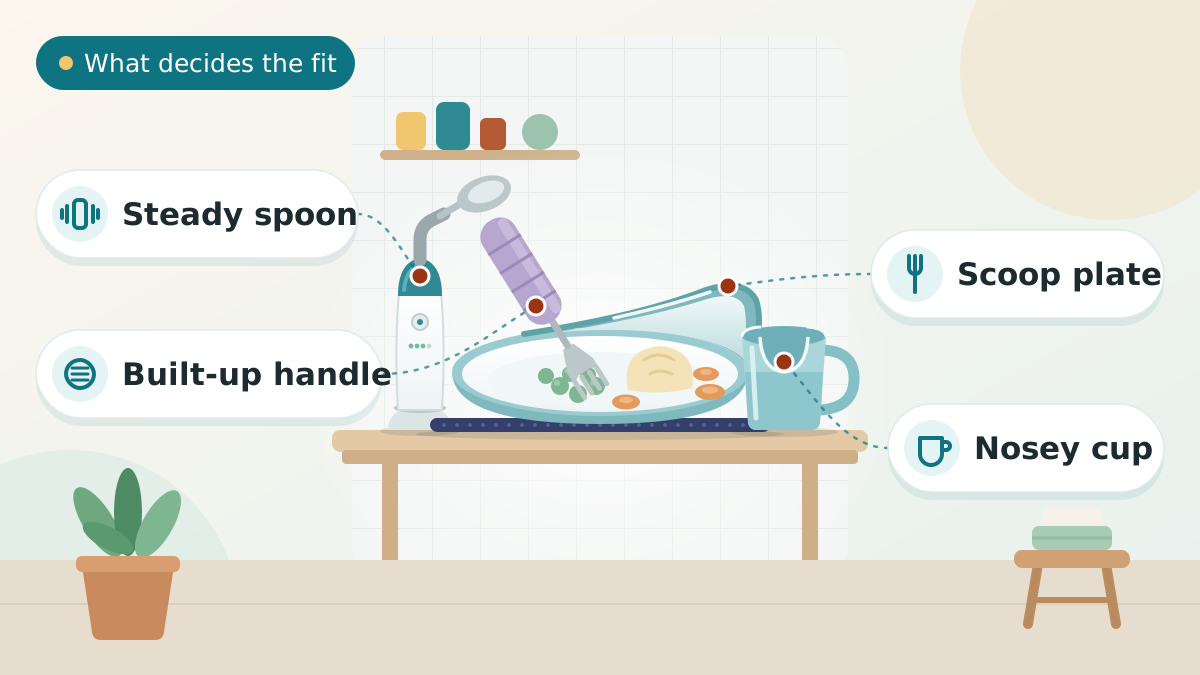
Tremors call for weighted or stabilizing utensils; arthritis or weak grip calls for built-up, large-handled utensils; one-handed eating after a stroke calls for a scoop plate, a plate guard, a non-slip mat, and a rocker knife; and difficulty drinking calls for a spill-proof or nosey cup. Identify the specific difficulty first, then choose the matching aid.
Weighted vs stabilizing for tremors
For tremor, the right choice depends on how severe the shaking is.
Weighted utensils add heft that dampens mild-to-moderate shaking and cost very little. An electronic stabilizing spoon actively counteracts tremor for significant shaking, but it's expensive. Choose weighted utensils for most people, and a stabilizing spoon for severe tremor where added weight alone isn't enough to get food to the mouth.
Built-up handles and grip
When grip is the problem, the handle is what matters.
For arthritis or weak hands, thick, soft, built-up handles are far easier to hold than thin standard cutlery, and some utensils are bendable to suit limited wrist or arm movement. For someone who can't grip at all, a universal cuff straps the utensil to the hand so they can still feed themselves.
Plates, bowls, and staying put
Dishware matters as much as utensils for unsteady or one-handed eating.
A scoop plate or dish with a high curved side lets a person push food onto the utensil one-handed, a plate guard adds the same wall to a normal plate, and a non-slip mat or suction base keeps everything from sliding around. Together these turn a frustrating meal into a manageable one.
Cups and drinking
Drinking has its own aids, and the right cup can reduce both spills and strain.
A nosey, or cutout, cup lets the person drink without tilting their head back, which helps with limited neck movement or swallowing concerns. Spill-proof lids, two handles, and weighted bases make drinking easier and reduce spills. Match the cup to the specific difficulty, whether that's swallowing, grip, or steadiness.
Read more:Daily Living Aids for Seniors
Tips to Choose Eating Aids
Short on time? Here are the key points to weigh before choosing, each covered in detail above:
- Match the aid to the challenge
- Weighted vs stabilizing for tremors
- Built-up handles and grip
- Plates, bowls, and staying put
- Cups and drinking
Comparing options? See our guides to Best Adaptive Eating Utensils, Best Electric Nail Clippers for Seniors, and Best Grabber Tools for Arthritis.
Eating aids protect nutrition, not just dignity
There's an important reason to act on eating difficulties promptly.
When meals become frustrating or messy, seniors often eat less, which risks weight loss and poor nutrition on top of the loss of dignity. The right aids do more than preserve self-respect — they help maintain healthy intake. If you notice someone struggling at meals, eating slowly, spilling often, or avoiding certain foods, adaptive utensils and dishware can make a real difference. For days when eating enough solid food still isn't happening, a protein or nutritional drink can help fill the gap. An occupational therapist can recommend specific aids, and a speech therapist should be involved if swallowing is a concern.
Eating aids for Parkinson's, arthritis, and after a stroke
Matching the aids to the condition is what makes them work:
- Parkinson's or essential tremor: weighted or stabilizing utensils and a weighted cup steady the hand.
- Arthritis: built-up grips and lightweight dishware reduce strain.
- After a stroke: a scoop plate, plate guard, non-slip mat, and rocker knife make one-handed eating possible.
- Limited neck or swallowing: a nosey cup avoids tilting the head.
Combine the aids that fit the person's condition, and pair them with other daily living aids and dressing aids for broader independence at home.
Frequently asked questions
For arthritis, the most helpful aids have thick, soft, built-up handles that are easy to grip without straining stiff hands, in a lightweight design so they're not tiring to lift. Bendable utensils help if wrist movement is limited. Pair them with a non-slip mat so plates don't slide. The goal is to reduce the grip strength and fine movement needed to eat comfortably.
Yes, for mild-to-moderate tremor. The added weight provides resistance that dampens shaking, making it easier to get food to the mouth, and weighted utensils are inexpensive and simple. For significant tremor, weight alone often isn't enough, and an electronic stabilizing utensil that actively counteracts the shaking — like the GYENNO spoon — works far better, though it costs considerably more.
Scoop plates and dishes with a high, curved inner wall let the person push food onto the utensil without it sliding off, which is ideal for one-handed or unsteady eating. A plate guard adds the same wall to an ordinary plate, and a suction base or non-slip mat keeps the plate from moving on the table. Together these greatly reduce spills and frustration at meals.
Very much so. Stroke often leaves a person eating one-handed, and the right aids make that possible: a scoop plate and plate guard to corral food, a suction base or non-slip mat to hold the plate, a rocker knife to cut with one hand, and built-up or strapped utensils for a weak grip. An occupational therapist can recommend the specific combination for the person's abilities.
Usually not. Medicare generally treats adaptive utensils and eating aids as convenience or self-help items rather than covered durable medical equipment, so they're typically out of pocket. They're mostly inexpensive, and HSA or FSA funds can often be used. Occupational therapy that recommends and trains their use may be covered even when the utensils themselves aren't, so it's worth asking.
A stabilizing spoon, such as the GYENNO, is an electronic handle that senses hand tremor and moves the spoon to keep it level; some models take interchangeable spoon and fork attachments. It's expensive compared with simple weighted utensils, but for moderate-to-severe Parkinson's or essential tremor it can genuinely restore independent eating, which many find well worth the cost.
A scoop plate has one side built up into a high, curved wall. When eating with one hand, the person pushes food against that wall to load it onto the fork or spoon, instead of chasing it around a flat plate or pushing it off the edge. Combined with a suction base that anchors the plate, it makes one-handed eating much more controlled and far less messy.
A nosey cup has a cutout in the rim that clears the nose, so the person can drink to the bottom without tilting their head back. This helps anyone with limited neck movement; if swallowing is a concern, ask a speech and language therapist which cup and drinking position are right. Many are also spill-resistant and easy to grip, making drinking safer and tidier overall.
A universal cuff — a strap that goes around the hand and holds a utensil — lets someone with very little grip strength still feed themselves, since they don't need to hold the handle at all. It's often used after a stroke or with conditions that severely weaken the hands. An occupational therapist can fit one and suggest the best utensils to use with it.
Many are dishwasher-safe, but it varies by product, so check before assuming. Even when they are, hand-washing often prolongs their life, especially for weighted utensils and bendable necks. Electronic stabilizing handles are not dishwasher-safe — only the detachable spoon or fork is washable, while the motorized handle is wiped clean. Simple regular cleaning keeps any eating aid hygienic and working well.
The final verdict
For most seniors, a weighted and bendable adaptive utensil set like the Special Supplies set is the best starting point — it helps with grip, mild tremor, and limited range at once. If tremor is significant, an electronic stabilizer is the honest answer: the GYENNO spoon, whose app lets you test the device against your own tremor before you spend anything. For arthritis without tremor, a light non-weighted set is kinder on stiff hands — and its curved knife handles one-handed cutting. For one-handed eating after a stroke, add a scoop plate with a non-slip base; for limited neck movement, a cut-out nosey cup. Match the aid to the specific difficulty at the table rather than buying the most expensive tool.
Our overall winner is the Special Supplies Weighted & Bendable Utensils. You can check the current price on Amazon.
Our Top 5 Picks at a Glance
Ready to choose? Here are the top 5 again.
Best Overall
Special Supplies Weighted & Bendable Utensils
Best for Significant Tremor
GYENNO Parkinson Spoon
Best for One-Handed Eating
Vive Spill-Proof Scoop Plate, 9" (2-Pack)
Best for Limited Neck Movement
Providence Spillproof Nosey Cup, 12 oz
Best for Arthritis & One-Handed Cutting
Special Supplies Adaptive Utensils, 5-Piece Non-Weighted
Affiliate links — we may earn a commission.
More reviews
