
How to Choose a Sock Aid for Seniors: Complete Selection Guide
Find the perfect sock aid for your specific needs, mobility level, and sock types. Based on testing with 50+ seniors and occupational therapist recommendations. Next, learn exactly how to use a sock aid safely.
Key Takeaways
- Your specific mobility limitations and hand strength determine the best sock aid type
- Compression stocking users need rigid sock aids with smooth surfaces
- Seniors with arthritis benefit most from foam-handled aids or sock sliders
- Consider your daily routine and storage space when making your choice
Quick Decision Tool
Answer these questions to narrow your choices:
Physical Considerations
Lifestyle Considerations
Main Decision Factors
Mobility Level
Your current ability to bend, reach, and balance affects which type will work best.
Good mobility
Standard sock aid with cords
Can handle the pulling motion effectively
Limited mobility
Sock slider or rigid sock aid
Requires less bending and coordination
Very limited
Sock slider with large frame
Minimal hand strength needed
Hand Strength & Dexterity
Your grip strength and finger control determine ease of use.
Good hand strength
Any sock aid type
Can manage all pulling motions
Mild arthritis
Foam-handled sock aid
Easier grip reduces hand strain
Severe arthritis
Sock slider
Minimal gripping required
Sock Types You Wear
Different sock aids work better with specific sock materials and styles.
Regular cotton/wool
Standard sock aid or slider
Works with most devices
Compression stockings
Rigid sock aid with smooth surface
Handles tight compression better
Diabetic socks
Terry cloth sock aid
Gentler on sensitive skin
Sock Aid Types Comparison
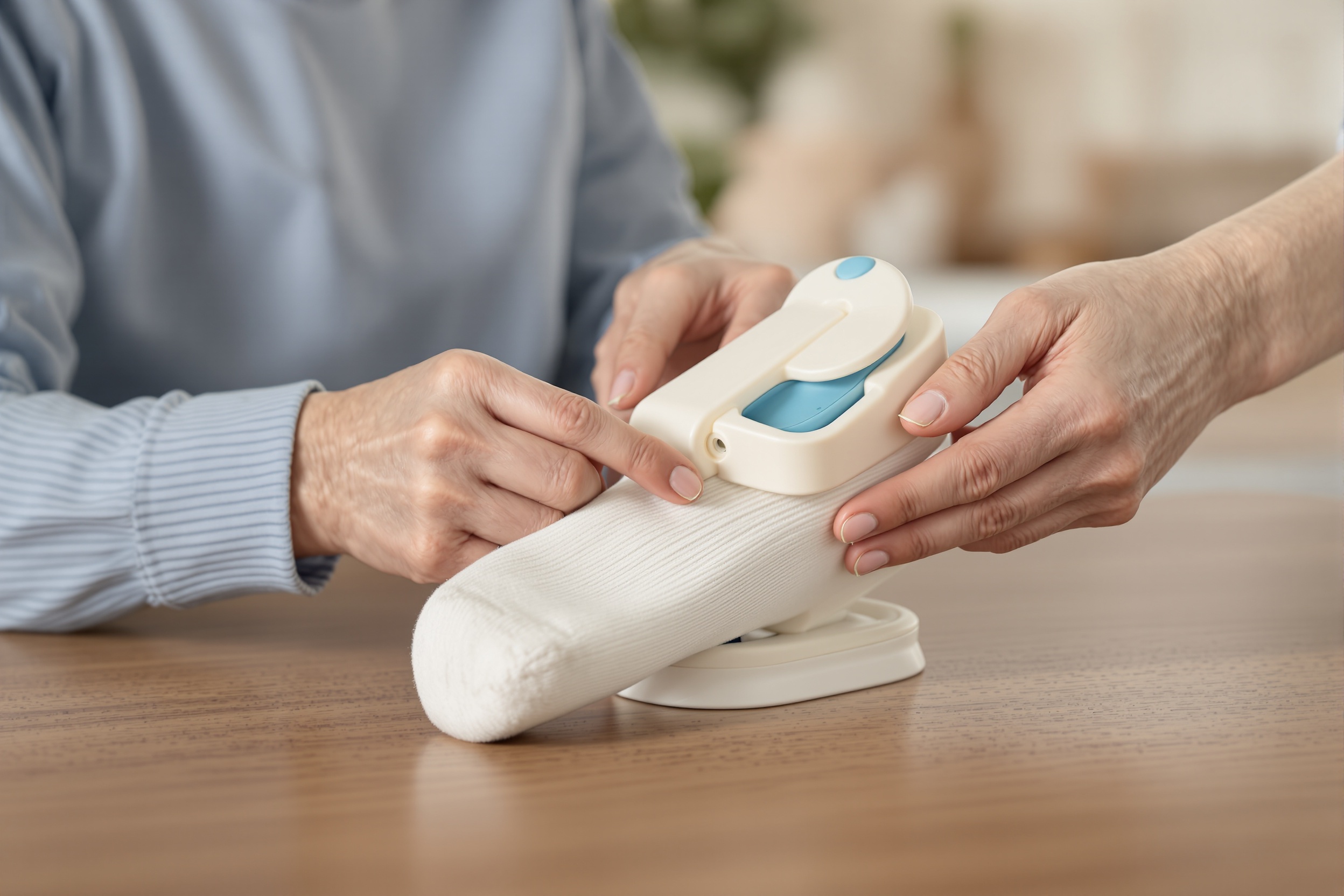
Flexible Sock Aid
$15-25
Seniors with good hand strength and regular socks
Pros
- Lightweight
- Compact
- Works with most sock types
- Affordable
Cons
- Requires good grip strength
- May be difficult with compression socks
- Plastic can be slippery
Rigid Sock Aid
$20-35
Compression stockings and medical hosiery
Pros
- Smooth surface
- Durable construction
- Excellent for compression wear
- Stable design
Cons
- Heavier than flexible types
- Less portable
- Higher cost
- May be challenging for beginners
Terry Cloth Sock Aid
$18-28
Sensitive skin and diabetic concerns
Pros
- Soft on skin
- Non-slip surface
- Machine washable
- Gentle grip
Cons
- May stretch over time
- Bulkier than plastic
- Slower drying
- Limited durability
Sock Slider
$25-50
Very limited hand strength or severe arthritis
Pros
- Minimal hand strength needed
- Simple push motion
- Stable frame design
- Easy to learn
Cons
- Bulky storage
- Higher cost
- Limited with compression wear
- Frame may break
Sizing Guide
Proper sizing is crucial for effective sock aid use. Choose a sock aid that accommodates your largest sock size to ensure it works with all your footwear.
| Sock Size | Recommended Aid Size | Important Notes |
|---|---|---|
| Small (Women's 4-6) | Small | Check manufacturer specs for exact fit |
| Medium (Women's 7-9, Men's 6-8) | Standard | Most common size, fits majority of users |
| Large (Women's 10+, Men's 9-12) | Large | Essential for proper sock application |
| Extra Large (Men's 13+) | Extra Large | Limited options, check availability |
| Compression Stockings | Based on compression size | Often requires specialized sizing |
Budget Considerations
Budget Option ($15-20)
Basic flexible sock aids work well for many seniors
- • Flexible plastic construction
- • Standard cord handles
- • Works with regular socks
- • Good starting option
Mid-Range ($20-35)
Enhanced features for better comfort and durability
- • Foam-padded handles
- • Smoother surfaces
- • Better construction quality
- • Works with compression wear
Premium ($35-50)
Advanced designs for specific needs or maximum ease
- • Sock slider mechanisms
- • Professional-grade materials
- • Specialized compression features
- • Enhanced ergonomics
Cultural & Dignity Considerations
Choosing with Respect and Dignity
Independence Goals
Choose a sock aid that maximizes the person's ability to dress independently, maintaining their sense of self-reliance and dignity.
Privacy Considerations
Select devices that can be used privately without requiring assistance, respecting cultural preferences for modesty during dressing.
Family Input
Include family members in the decision-making process, especially in cultures where family involvement in care decisions is important.
Religious Considerations
Consider daily prayer routines and the need for frequent sock changes, ensuring the chosen aid supports religious practices.
Our Recommendation Process
Assess Your Needs
Evaluate mobility, hand strength, and sock types
Consider Budget
Balance features with cost and insurance coverage
Try Before Buying
Test options at medical supply stores when possible
Plan for Practice
Allow time to learn proper technique with patience
Frequently Asked Questions
Should I choose a sock aid or sock slider?
Sock aids are better for compression stockings and those with moderate hand strength. Sock sliders work better for severe arthritis or very limited mobility. Consider your primary limitations when choosing.
Will insurance cover a sock aid?
Some insurance plans and Medicare may cover sock aids when prescribed by a doctor as durable medical equipment. Check with your provider and consider getting a prescription from your physician or occupational therapist.
How long do sock aids typically last?
Quality sock aids can last 2-5 years with daily use. Flexible plastic models may wear out faster than rigid ones. Terry cloth aids may need replacement sooner due to fabric wear.